Gaming has always had a weird relationship with customization.
Give players a character creator, and they will spend two hours adjusting cheekbones before even touching the main quest. Give them mod support, and suddenly a serious RPG becomes a playground full of new armor, better lighting, anime hair, Thomas the Tank Engine dragons, and things nobody should probably install on a shared family PC.
That is part of the charm of gaming culture. Players like to bend worlds. They like to personalize characters, rewrite rules, and make games feel more like their own space.
But AI has changed the conversation.
Not because adult mods are new. They are not. Anyone who has spent five minutes around PC modding communities knows that mature content has been there for decades. What is new is speed, realism, and accessibility. AI tools can now generate images, alter characters, create fantasy avatars, and produce adult-style visuals without the same technical skill that older modding required.
That creates possibilities. It also creates problems.
And gaming communities need to talk about both.
Adult content in games is not new
Let’s be honest: games have never been as innocent as people pretend.
From romance options in RPGs to suggestive character designs, dating sims, mature visual novels, fan art, and modded skins, adult themes have always existed around gaming. Some of it is official. Some of it is fan-made. Some of it lives in the strange underground world of modding forums.
Players have always used games to explore fantasy. Sometimes that fantasy is power. Sometimes it is adventure. Sometimes it is romance, attraction, or identity. That does not automatically make it bad.
The problem begins when fantasy stops respecting consent.
A fictional adult character created for mature storytelling is one thing. Using AI to sexualize real people, private images, streamers, actors, or anyone who did not agree to it is something else entirely. That is not creativity. That is a violation.
This distinction matters more now than ever, because AI makes the line easier to cross.
Why AI makes the issue more complicated
Traditional adult mods usually required some level of effort. Someone had to model, texture, edit, animate, or manually alter files. AI lowers that barrier. A person can generate or modify an image with very little skill, very quickly.
That ease is exactly why AI tools are spreading.
The rise of https://joi.com/generate/ai-nude-maker shows how quickly the adult-focused generation has entered the wider conversation around mods, avatars, character customization, and digital consent.
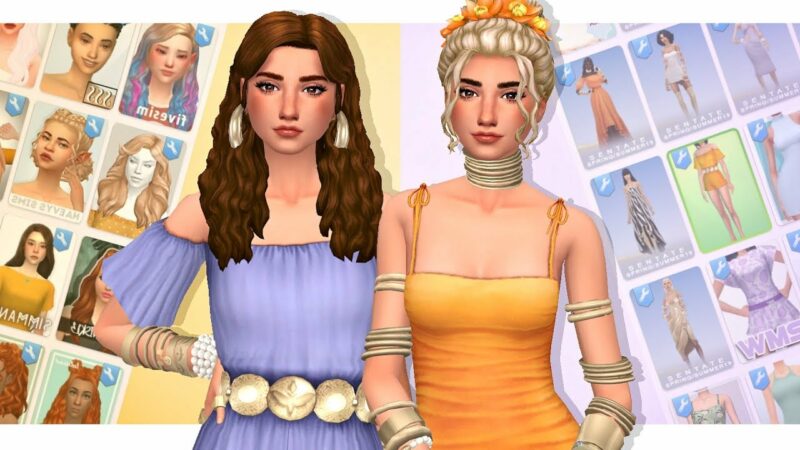
For gaming, this connects to several familiar areas: character creators, NPC design, modding, virtual companions, roleplay communities, and fan art. Players are already used to customizing digital bodies. AI simply gives them more power.
But more power means more responsibility.
If a tool is used for fictional adult characters, private fantasy, or consensual creative work, the conversation is different. If it is used to target real people or create non-consensual sexual images, it becomes harmful fast.
Gaming culture has to be mature enough to say that clearly.
The modding community will feel this first
Modding communities are usually where these debates show up before the mainstream notices.
A new Bethesda game drops, and within days people are already changing textures, adding outfits, tweaking faces, and building entire systems the developers never planned. Some mods improve performance. Some fix bugs. Some add quests. Some are purely cosmetic. And yes, some are adults.
AI will make that ecosystem messier.
Imagine players generating custom companion portraits, alternative character skins, visual novel scenes, or adult-themed avatars. Some of that will be harmless within age-restricted spaces. Some will be questionable. Some will break platform rules. Some will almost certainly cross ethical lines.
The hard part is that modding culture often values freedom. Players do not like being told what they can and cannot do with games they bought. But freedom without boundaries can turn communities toxic very quickly.
A healthy modding scene needs rules, especially around real people, minors, harassment, and non-consensual content.
Consent should be the baseline
This should not be complicated.
Do not use AI to create sexual images of real people without their permission. Do not use someone’s face, likeness, stream clips, selfies, or social media photos as material for adult content unless they clearly agreed to it. Do not target creators, cosplayers, voice actors, esports players, or community members.
Gaming communities are full of public-facing people. Streamers, modders, reviewers, Discord admins, artists, developers, and fans all exist in the same ecosystem. AI tools can be abused against them.
That is why consent has to be treated as the baseline, not as an optional courtesy.
If adult AI content is going to exist around gaming, it should stay in clearly labeled, age-restricted, fictional, and consensual spaces. Anything else risks turning a creative tool into a harassment tool.
Game platforms will need clearer rules
Steam, Discord servers, modding hubs, fan art communities, and social platforms will all face pressure to decide what is allowed.
Some questions are obvious. Is the content age-restricted? Is it based on fictional adult characters? Does it involve real people? Was consent given? Is the content being used to harass someone? Does it violate a game’s community guidelines?
Other questions are harder.
What about a player-generated character that looks similar to a real person but is not named? What about AI-generated fan art of a character whose age is ambiguous? What about adult mods for games with mixed-age audiences? What about private Discord communities sharing content outside official platforms?
There will not be one perfect answer. But ignoring the issue will not work.
Gaming platforms have already had to deal with cheating tools, stolen assets, toxic chat, doxxing, and harassment. AI-generated adult content is another moderation challenge, and it will probably grow faster than most platforms are ready for.
Developers should think ahead
Game developers cannot control everything players do. That has always been true. But they can shape the boundaries.
If a game includes deep character customization, mod support, or AI-powered NPC tools, developers should think about adult misuse before it becomes a crisis. That means clear terms, reporting systems, content filters, age gates, and strong policies against non-consensual sexual content.
It also means not pretending that players will only use tools in the intended way.
Players are creative. Sometimes brilliantly creative. Sometimes chaotically creative. Any system that lets people generate faces, bodies, outfits, or scenes can be pushed into unexpected territory.
Good design plans for that.
The future is not censorship versus chaos
A lot of online arguments turn into two useless extremes.
One side says everything adult should be banned. The other side says anything should be allowed because it is “just pixels.”
Neither view is serious enough for where technology is going.
Adult fantasy has always existed in gaming culture, and it is not going away. At the same time, digital harm is real. Non-consensual AI images can damage people, humiliate them, and push them out of communities.
The better conversation is about boundaries.
Fictional adult content between consenting adults is not the same as targeting real people. Private fantasy is not the same as public harassment. Modding a game for yourself is not the same as distributing harmful material.
Gaming communities need to be able to tell the difference.
AI is forcing gaming culture to grow up
Games are no longer a niche hobby hiding in bedrooms and LAN parties. They are mainstream culture. They involve creators, celebrities, esports, live streaming, social platforms, virtual economies, and massive online communities.
That means gaming has to deal with real cultural questions.
AI-generated adult content is one of them.
The technology is not going to disappear. The tools will get better, faster, and easier to use. Players will experiment. Modders will experiment. Platforms will scramble. Some people will use AI creatively. Others will use it irresponsibly.
The communities that handle this best will be the ones that set clear expectations early: respect consent, protect real people, label mature content, keep minors out, and do not use fantasy as an excuse for harm.
That may not sound as exciting as a new graphics card or a huge RPG release. But it matters just as much.
Because the future of gaming is not only about better visuals or smarter NPCs. It is also about whether the culture around those tools becomes more thoughtful — or just more reckless.