
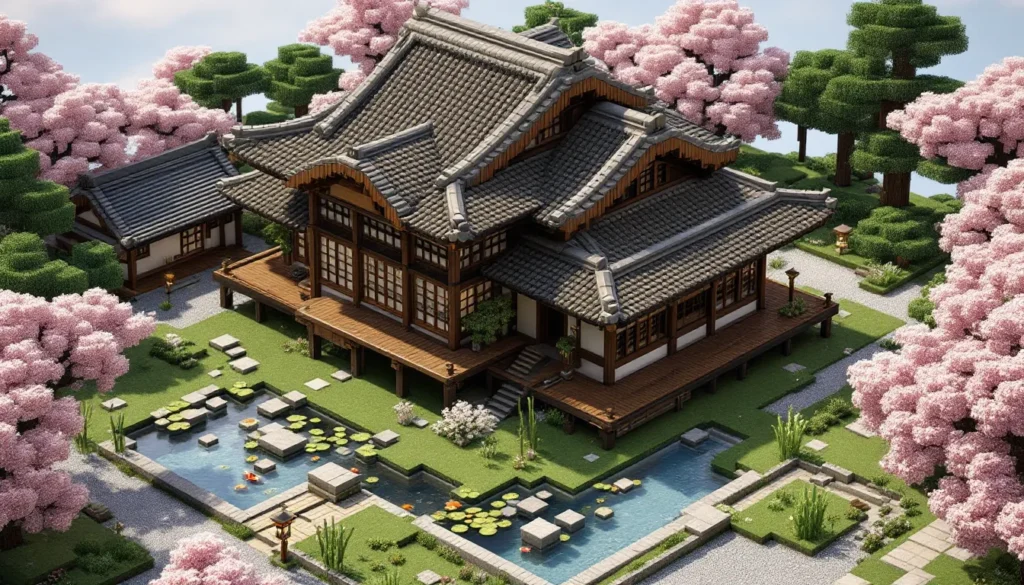
Japanese architecture in Minecraft has become one of the most popular building styles, and for good reason. The clean lines, natural materials, and distinct silhouettes of traditional Japanese structures translate beautifully into blocky form. Whether players are constructing a peaceful zen temple on a mountainside or a sleek modern home with minimalist interiors, Japanese-inspired builds offer a level of sophistication that stands out on any server.
In 2026, the Minecraft building community continues to push the boundaries of what’s possible with Japanese designs. From classic minka farmhouses with their sweeping curved roofs to contemporary fusion builds that blend ancient aesthetics with modern geometry, there’s never been a better time to jump into this architectural style. This guide walks through everything needed to create authentic Japanese houses in Minecraft, covering essential materials, traditional and modern design approaches, step-by-step construction techniques, and the finishing touches that make these builds truly memorable.
Key Takeaways
- Japanese Minecraft house designs leverage the game’s blocky aesthetic perfectly, with clean lines, modular construction, and horizontal emphasis aligning naturally with block-based building systems.
- Authentic material selection—dark oak, spruce, and birch wood paired with white concrete and stone—creates visual depth and authenticity essential to convincing Japanese builds.
- The curved roof is the defining feature of traditional Japanese structures; using stair blocks, slabs, and the characteristic upturn technique transforms basic angular blocks into iconic silhouettes.
- Japanese architecture integrates seamlessly with landscape design, requiring builders to develop gardens, pathways, ponds, and exterior lighting as integral parts of the overall composition rather than afterthoughts.
- Traditional styles like minka farmhouses and machiya townhouses offer distinct gameplay opportunities, while modern fusion designs and minimalist contemporary homes demonstrate how Japanese architectural principles adapt to various creative visions.
Why Japanese Architecture Works Perfectly in Minecraft
Japanese architecture feels tailor-made for Minecraft’s blocky medium. The fundamental design principles align almost perfectly with the game’s grid-based building system.
Traditional Japanese structures emphasize horizontal lines, modular construction, and clear geometric forms, all elements that translate seamlessly into block placement. The post-and-beam construction method used in historical Japanese buildings mirrors how players naturally build support structures in Minecraft. Wooden pillars become oak or spruce logs, while the spaces between them fill with walls of various materials.
The limited color palette of traditional Japanese architecture, predominantly wood tones, stone grays, and white plaster, matches Minecraft’s material variety without requiring exotic blocks. Players can achieve authentic looks using common resources found in most biomes. Dark oak and spruce create rich brown tones, while birch and stripped logs provide lighter contrasts.
Japanese buildings also feature distinctive roofing with dramatic curves and overhangs. While Minecraft’s blocks don’t naturally curve, stair blocks and slab techniques allow builders to approximate these iconic roof lines convincingly. The challenge of recreating curves with angular blocks actually adds to the appeal, it’s a puzzle that rewards clever block placement and spatial thinking.
The emphasis on natural integration with surroundings makes Japanese builds perfect for survival mode. These structures look best when nestled into landscapes, surrounded by gardens, water features, and carefully placed foliage. This design philosophy encourages players to consider their build’s environment rather than just plopping down a structure anywhere.
Essential Materials for Authentic Japanese Builds
Wood Types and Color Palettes
Wood selection defines the entire aesthetic of a Japanese Minecraft house. The right combination creates depth and authenticity, while poor choices result in flat, unconvincing builds.
Primary wood types:
- Dark oak planks and logs: The backbone of most traditional builds. Use for main structural elements, pillars, and roof supports. The deep brown tone mimics aged timber.
- Spruce planks: Slightly cooler brown tone that works for walls, floors, and secondary structures. Pairs excellently with dark oak for contrast.
- Stripped oak or birch logs: Perfect for exposed beams and decorative elements. The lighter color creates visual interest against darker woods.
- Acacia (sparingly): The orange-red tone can represent certain stained or painted wood elements, but use conservatively to avoid overwhelming the palette.
Color theory matters here. Japanese architecture traditionally uses a triadic approach, dark structural elements, medium-toned walls, and light accent pieces. Replicate this by combining dark oak pillars, spruce walls, and stripped birch beams.
For painted or plastered sections, white and light gray concrete works beautifully. Smooth stone, white concrete powder (carefully placed to avoid breakage), and calcite provide clean surfaces that contrast with wood grain. Some builders incorporate bone blocks for textured white surfaces, though this reads as more contemporary.
Roofing Materials and Techniques
Roof construction separates mediocre Japanese builds from exceptional ones. The materials and methods create that immediately recognizable silhouette.
Primary roofing materials:
- Dark oak stairs and slabs: The standard for traditional curved roofs. Stairs create the slope, while upside-down stairs form the characteristic upturn at roof edges.
- Blackstone stairs and slabs: Adds weight and darkness to roofs, excellent for temples and larger structures.
- Stone brick stairs (all variants): Works for older, weathered looks or stone-tiled roofs on important buildings.
- Deepslate tiles: Introduced in recent updates, these provide a sleek, dark finish perfect for modern Japanese designs.
The technique matters as much as materials. Traditional Japanese roofs feature multiple layers, the main roof plane, then decorative edge pieces that curve upward. In Minecraft, achieve this by:
- Building the main roof slope with stair blocks
- Adding a second layer of upside-down stairs at the edges to create the upturn
- Using slabs to smooth transitions and add thickness
- Incorporating fence posts or walls as decorative roof supports
Many builders following detailed building guides add a third sub-roof layer on larger structures, creating the tiered effect seen on pagodas and temples. This requires careful planning but dramatically increases authenticity.
Traditional Japanese House Designs
Classic Minka Farmhouse Build
The minka represents the quintessential rural Japanese dwelling, simple, functional, and harmonious with nature. These farmhouses dominated the countryside for centuries and remain iconic.
Key features of a Minecraft minka:
- Foundation: Raised slightly off the ground using stone or cobblestone blocks, with wooden pillars visible beneath the main floor
- Footprint: Rectangular, typically 12×16 to 16×20 blocks for a standard single-family home
- Walls: Dark oak or spruce pillars at corners and intervals, with lighter wood planks filling between them
- Roof: Steeply pitched gable roof using dark oak stairs, extending well beyond walls for deep overhangs
- Entrance: Covered porch area (genkan) at the front, set back slightly from the main roof line
The minka’s charm comes from its rustic simplicity. Avoid overthinking the design, these were working buildings, not showpieces. Exposed beams, practical layouts, and minimal decoration define the style. A small engawa (veranda) wrapping one or two sides adds authenticity without requiring complex construction.
For a cherry house Minecraft variant, consider placing the minka near cherry grove biomes (if available in the current version) or creating custom cherry trees using pink concrete powder or wool for blossoms. The contrast between rustic brown wood and delicate pink flowers creates stunning visual appeal.
Elegant Machiya Townhouse
The machiya evolved in Japanese cities as combined residential and commercial spaces. Long, narrow lots resulted in distinctive deep structures with interior courtyards.
Machiya characteristics:
- Dimensions: Narrow street frontage (8-10 blocks) with significant depth (20-30+ blocks)
- Front facade: Traditional shopfront with latticed windows and sliding doors
- Interior courtyard: Small open-air space (tsubo-niwa) midway through the structure, bringing light to the deep interior
- Multiple levels: Often two stories at the front, single story at the rear
- Material mix: More refined than minka, incorporating plastered walls, tile roofs, and decorative woodwork
Building a machiya in Minecraft creates unique gameplay opportunities. The front can serve as a trading hall with villagers, while the rear functions as private quarters. The courtyard breaks up the long interior, preventing the claustrophobic feel that narrow builds can create.
Use trapdoors, fences, and creative block placement to simulate the latticed windows (kōshi) that characterize machiya facades. Noren (fabric dividers) can be represented with banners hung in doorways.
Zen Temple and Shrine Structures
Temples and shrines represent the pinnacle of traditional Japanese architecture, grand, meticulously detailed, and rich with symbolism.
Temple construction priorities:
- Scale: These buildings should dominate their surroundings. Main halls typically start at 20×20 blocks minimum
- Tiered roofs: Multiple roof layers, each slightly smaller than the one below, creating the pagoda effect
- Red and gold accents: Red concrete or terracotta for pillars and trim, gold blocks sparingly for decorative elements
- Elevated platform: Build temples on raised stone platforms accessed by stairs
- Bell towers: Separate structure with a bell (anvil or bell block) housed in an open wooden frame
Shrine designs differ from temples in key ways. Shrines feature the distinctive torii gate, two vertical pillars with two horizontal beams, the upper beam extending past the pillars. Construct this using nether brick fences or red concrete pillars, with dark oak slabs forming the horizontal elements.
Many mod collections include additional decorative blocks that enhance temple builds, though vanilla Minecraft provides everything needed for impressive results. The key is symmetry, repetition of elements, and careful attention to roof construction.
Modern Japanese House Styles
Minimalist Contemporary Homes
Modern Japanese residential architecture embraced minimalism decades before it became a global trend. These designs strip away ornamentation, focusing on clean lines, open spaces, and the interplay of light and shadow.
Contemporary Japanese house elements:
- Cube and rectangular forms: Forget curved roofs, modern designs use flat or very low-pitched roofs with clean edges
- Large glass sections: Use glass panes extensively to create floor-to-ceiling windows
- Monochromatic palettes: White concrete, light gray concrete, and black concrete form the base, with wood accents
- Floating volumes: Create sections that appear to cantilever or float using careful support hiding
- Indoor-outdoor flow: Designs that blur the boundary between interior and exterior spaces
Material choices:
- Smooth quartz for bright white walls
- Concrete (any color) for textured surfaces
- Black or gray stained glass for privacy while maintaining light
- Polished basalt or blackstone for dark accent walls
- Stripped birch or oak for warm wood elements
The challenge with modern Japanese builds is making them interesting even though the simplicity. Vary ceiling heights within the structure. Use different floor levels connected by single steps. Create recessed lighting with glowstone or sea lanterns behind white stained glass. These subtle touches prevent the minimalist aesthetic from feeling boring.
Contemporary builds work especially well in creative mode where players can focus purely on design without resource constraints. The clean geometry also makes them excellent for city builds or modern server hubs.
Fusion Designs Blending Old and New
Fusion architecture represents the sweet spot for many Minecraft builders, combining traditional Japanese elements with modern materials and forms. This style reflects how Japanese architects actually approach contemporary design, respecting historical precedents while embracing new possibilities.
Fusion techniques:
- Traditional roof on modern base: Build a clean, geometric modern structure, then top it with a classic curved roof. The contrast creates immediate visual interest.
- Wood and concrete combinations: Use traditional dark oak beams as structural accents within white concrete walls
- Updated courtyards: Incorporate the traditional interior courtyard concept but with modern materials, concrete, glass floors, contemporary landscaping
- Selective ornamentation: Add traditional elements like shoji screens or tatami areas to otherwise modern interiors
One effective fusion approach places a traditional-style entrance facade on a modern structure. The front presents classic wooden posts, a curved roof overhang, and traditional doors, but passing through reveals contemporary open-plan interiors with modern materials.
Fusion builds benefit from asymmetry. Traditional Japanese architecture often emphasizes balance and symmetry, while modern design plays with asymmetrical compositions. Combining both creates dynamic structures that reward closer inspection. Add a traditional wing to one side of a modern core, or let a contemporary glass extension project from a classic wooden base.
Step-by-Step: Building Your First Japanese House
Foundation and Floor Plan Layout
Every successful Japanese house starts with proper planning. Unlike medieval or fantasy builds where organic shapes work well, Japanese architecture demands intentional geometry.
Step 1: Choose the location. Japanese buildings look best integrated with terrain rather than dominating it. A flat area near water, a hillside with views, or a forest clearing all work excellently.
Step 2: Clear and level the building area. Even if the house will adapt to terrain, start with a clear understanding of the footprint.
Step 3: Mark the foundation perimeter. For a first build, start modest, a 12×14 or 14×16 footprint provides enough room for a proper layout without overwhelming complexity.
Step 4: Construct the foundation. Options include:
- Raised wooden platform using oak or spruce planks with exposed posts beneath
- Stone slab foundation sitting directly on ground
- Combination with stone base and wooden floor elevated 2-3 blocks above
The raised foundation approach offers the most authentic traditional look. Place dark oak logs at corners and every 3-4 blocks along the perimeter. Connect these posts at ground level with stripped logs or beams. Build the floor platform on top using planks.
Step 5: Map the interior layout before building walls. Japanese homes traditionally divide into multiple rooms rather than open plans. Mark where walls will go using temporary blocks. Typical room sizes run 4×4 to 6×6 blocks, smaller than Western-style rooms.
###Constructing Walls and Support Beams
Japanese wall construction emphasizes the structural framework. The pillars and beams form the actual structure, while walls simply fill the gaps.
Step 1: Build corner posts. Use full dark oak logs (not planks) extending from foundation to ceiling level. These should rise 4-5 blocks above the floor for standard ceiling height.
Step 2: Add intermediate posts. Place additional log pillars every 3-4 blocks along walls. This creates the characteristic framework appearance.
Step 3: Install horizontal beams. At the top of the posts, connect them with stripped oak or dark oak logs running horizontally. These beams will support the roof.
Step 4: Fill wall sections. Between the structural posts, fill with:
- Spruce or oak planks for solid walls
- White concrete or plaster-effect blocks for variation
- Glass panes (use light gray or white stained glass for privacy)
- Combination approaches with different materials on different walls
Leave openings for doors and windows at this stage. Traditional Japanese doors are wider than Minecraft’s single-block doors, so plan for double-door openings or use trapdoors and fences to create sliding door effects.
Step 5: Add interior beams. Place stripped logs horizontally across the ceiling at regular intervals. These exposed beams authenticate the post-and-beam construction method.
For accuracy, posts should always be logs (vertical grain), while horizontal beams should be stripped logs (horizontal grain pattern). This subtle detail significantly improves the final appearance.
Creating the Signature Curved Roof
The roof defines a Japanese build more than any other element. The curved profile requires specific techniques that take practice but become intuitive quickly.
Step 1: Determine roof pitch and overhang. Japanese roofs typically extend 2-3 blocks beyond walls on all sides. Plan for this when positioning the roof structure.
Step 2: Build the main roof slope. Starting from one side:
- Place a row of dark oak stairs along the top of one wall, facing inward
- Move up and in one block, place another row of stairs
- Continue this pattern until reaching the roof peak
- Mirror the process from the opposite wall
- Fill the peak with slabs or a ridge beam of whole blocks
Step 3: Create the roof overhang. Extend the bottom row of stairs outward 2-3 blocks beyond the walls. Support this overhang with fence posts or walls connecting to the horizontal beams, simulating the bracket systems (tokyō) used in real Japanese architecture.
Step 4: Add the characteristic upturn. This is where the roof becomes distinctly Japanese:
- At the ends of each roof edge (gable ends and eaves), place upside-down stairs facing outward
- These create the subtle upward curve at roof corners
- Add slabs to smooth the transition
Step 5: Detail the roof. Add:
- A decorative ridge line using different blocks (stone brick stairs, for example)
- Slab layers to add thickness and depth
- Fence posts at peak intersections for ornamental details
Common mistake: making the roof pitch too steep or too shallow. Japanese roofs typically use a 1:1 or 2:1 rise-to-run ratio (moving up one block for every 1-2 blocks of horizontal distance). Test different pitches in creative mode before committing in survival.
Interior Design Elements for Japanese Homes
Tatami Rooms and Sliding Doors
Authentic Japanese interiors revolve around the tatami mat, traditional flooring that influenced room sizes and proportions. Minecraft offers several approaches to recreating this essential element.
Tatami floor techniques:
- Carpet method: Place light gray or lime carpet in grid patterns on wood plank floors. Leave one-block gaps between carpets to simulate mat edges.
- Wood variation: Alternate oak planks with birch planks in rectangular patterns. Less visually accurate but easier to carry out.
- Full carpet: Cover entire floors with beige or light gray carpet for the overall tatami texture without worrying about individual mat patterns.
Room sizes in traditional Japanese homes were measured in tatami mats (one mat roughly 3×6 feet). A six-mat room or eight-mat room represented standard sizes. In Minecraft terms, this translates to rooms roughly 4×6 or 5×6 blocks.
Sliding doors (fusuma and shoji) define Japanese interior flexibility. Rooms reconfigure by opening or closing these lightweight partitions. Several Minecraft methods approximate this:
- Banner doors: Hang white or light gray banners from the ceiling in doorways. They don’t actually function but create the visual effect.
- Trapdoor technique: Place birch or white concrete, then position trapdoors as decorative elements suggesting screens.
- Fence gates: White or birch fence gates create functional doors with a screen-like appearance when placed side by side.
- True sliding simulation: Use armor stands with carved pumpkins and resource packs, though this requires more technical knowledge.
For shoji screens (paper screens that let light through), position white or light gray stained glass panes with wooden frames created using trapdoors or fences. The light filtering through creates the characteristic soft illumination of traditional Japanese interiors.
Furniture and Decoration Ideas
Japanese interiors embrace minimalism but not emptiness. Each element serves a purpose and occupies a specific place.
Essential furniture pieces:
- Low table (chabudai): Create using a slab or carpet square with fence posts beneath, or simply a carpet in the center of a room
- Seating: Stairs or slabs positioned as floor cushions. White or red carpet squares work as zabuton (cushions)
- Storage (tansu): Build from dark oak stairs and slabs to create chest-of-drawers appearance, or use actual barrels and chests arranged vertically
- Futon bed: Place white or gray carpet in bed-sized rectangles. Most players still use functional beds but disguise them under carpets or in alcoves
- Tokonoma alcove: A raised alcove for displaying scrolls and flowers. Build a small recessed area (1 block deep, 2-3 blocks wide) elevated one block, with a painting or item frame on the back wall and a flower pot below
Decorative elements:
- Paintings representing kakemono (hanging scrolls)
- Potted plants, particularly bamboo, azalea, or cherry saplings
- Lanterns (soul lanterns for cooler light, regular lanterns for warmer)
- Armor stands without armor as decorative sculptures
- Bonsai displays using small trees in pots elevated on slabs
- Weapon displays with swords (place on walls using item frames)
Lighting in Japanese builds should feel natural and understated. Hide glowstone or sea lanterns behind white stained glass screens. Place lanterns in corners or hanging from ceilings. Avoid the bright, even illumination common in other build styles, let shadows exist.
Keep rooms relatively empty. Players accustomed to cramming furniture into every space need to resist that impulse. A traditional Japanese room might contain only a low table, a couple of cushions, a scroll alcove, and a tansu, that’s it. The emptiness isn’t lack of design: it’s intentional aesthetic philosophy.
Landscaping and Exterior Details
Japanese Gardens and Koi Ponds
Japanese architecture never exists in isolation. The surrounding landscape forms an integral part of the design, with gardens carefully composed to complement structures.
Core garden principles:
- Asymmetrical balance: Arrange elements in visually balanced but not symmetrical patterns
- Borrowed scenery (shakkei): Design gardens to incorporate distant landscape features into the composition
- Controlled nature: Shape natural elements like trees, water, and stone to appear natural but carefully considered
Koi ponds anchor many Japanese gardens and translate beautifully to Minecraft:
Step 1: Excavate the pond area near the house. Organic, irregular shapes work better than perfect rectangles. Depth of 2-3 blocks looks appropriate.
Step 2: Line with stone variants, smooth stone, andesite, or stone bricks. Add moss or lily pads for natural texture.
Step 3: Stock with fish. Tropical fish in various colors represent koi. Use salmon and tropical fish buckets to populate the pond.
Step 4: Edge with vegetation. Place azalea bushes, flowering azalea, or custom trees around the perimeter. Stone slabs as pathway edging complete the look.
Step 5: Add a bridge if the pond is large enough. Simple arched bridges using stairs and slabs, or flat bridges from oak or spruce planks, connect across the water.
Rock gardens (karesansui):
For dry gardens or zen gardens, replace water with gravel or sand. Place gravel or white concrete powder in raked patterns (create lines using carpet or different gravel colors). Position larger stone blocks (andesite, cobblestone, or stone bricks) as focal points. These minimalist gardens work excellently in small spaces between buildings.
Vegetation choices:
- Bamboo (essential if available in the version being played)
- Oak or dark oak trees pruned to shape by removing excess foliage
- Azalea bushes and trees
- Cherry trees or custom pink wool/concrete trees in cherry house Minecraft builds
- Ferns and tall grass in moderation
- Lily pads in water features
Avoid overgrown, wild vegetation. Japanese gardens are meticulously maintained. Every plant placement is intentional. Space elements apart rather than clustering them densely.
Pathways, Fences, and Outdoor Lighting
Exterior details complete the Japanese aesthetic, connecting structures to their surroundings and adding layers of authenticity.
Pathway designs:
Japanese paths come in several distinct styles, each appropriate for different contexts:
-
Stepping stones (tobi-ishi): Place individual stone blocks (smooth stone, andesite, or stone bricks) in irregular patterns across grass or gravel. Space them one block apart for a natural walking rhythm. This works perfectly for garden paths.
-
Gravel paths: Create borders using upside-down stone brick stairs or slabs, then fill with gravel. Width of 2-3 blocks feels appropriate for main paths. Mixing coarse dirt with gravel adds texture.
-
Stone slab paths: Use smooth stone slabs or stone brick slabs for more formal approaches to entrances. Edge with fences or hedges.
-
Wooden walkways: Elevated wood plank paths on posts work near water features or in gardens. Use spruce or oak planks with fence post supports.
Fencing options:
Traditional Japanese fences differ significantly from Minecraft’s standard picket fences:
- Bamboo fencing: Use actual bamboo blocks or fence posts to simulate traditional bamboo fences
- Stone walls: Cobblestone or stone brick walls work for property boundaries
- Hedge fencing: Azalea leaves or oak leaves positioned as hedge rows
- Post-and-rail: Dark oak fences with horizontal rails create simple property divisions
Outdoor lighting:
Lighting should enhance ambiance without breaking immersion. Traditional Japanese gardens use carefully positioned lanterns rather than widespread illumination.
Stone lanterns (tōrō): Build using a combination of blocks:
- Base: stone brick or cobblestone block
- Post: cobblestone wall or fence
- Light chamber: fence posts or walls in a square with lantern or glowstone in the center
- Top: stone brick stairs as the roof cap
Position these lanterns at path intersections, garden focal points, and near entrances. Space them out, not every corner needs light.
Hanging lanterns: Suspend regular or soul lanterns from roof overhangs using fences or chains. These provide soft illumination for entrances and verandas.
Ground lighting: Hide glowstone or sea lanterns under carpet, or bury them one block below paths with carpet on top, creating ground uplighting for dramatic evening effects.
Players can reference comprehensive building tutorials for additional landscaping inspiration, though experimentation and personal aesthetic judgment eventually create the most satisfying results. The goal is atmosphere, the space should feel like a place where someone would actually want to spend time, not just a collection of decorative elements.
Advanced Tips and Common Mistakes to Avoid
Advanced construction techniques:
-
Layer roofs for depth: Don’t settle for a single layer of stairs. Add a second or third layer, each slightly offset, to create roof thickness and complexity. The extra dimension makes roofs look substantial rather than paper-thin.
-
Mix wood tones deliberately: Use at least three different wood types in any build. Dark oak for primary structure, spruce for walls, and birch or stripped oak for accents creates visual richness without feeling chaotic.
-
Vary ceiling heights: Japanese architecture often features different ceiling levels in different rooms. Drop ceilings in smaller rooms, raise them in common areas. This variation adds architectural interest and breaks up monotonous interiors.
-
Add weathering and age: Perfect, uniform surfaces don’t exist in real buildings. Mix in cobblestone with stone brick, add moss to stone areas, combine andesite with regular stone. These imperfections create character.
-
Use negative space: The empty areas are as important as the filled ones. Let gardens breathe. Don’t fill every interior corner. Resist the urge to add “just one more thing.” Restraint separates good Japanese builds from great ones.
-
Build in odd numbers: Japanese aesthetics favor odd-numbered groupings. Place three lanterns instead of two. Create five stepping stones instead of four. This principle (from Chinese aesthetics) creates more dynamic compositions.
Common mistakes to avoid:
-
Oversized builds: Japanese residential architecture emphasizes human scale. Massive structures feel wrong unless building temples or castles. Keep houses modest. Players often build too large, creating interiors that feel empty or require excessive furniture.
-
Wrong roof pitch: The roof angle defines the style. Too steep reads European. Too shallow looks modern. Test different stair patterns until the curve feels right. The classic upturn at edges is essential, don’t skip it.
-
Neglecting surroundings: Building a beautiful house in a cleared dirt field wastes half the aesthetic. Japanese architecture and landscape form one unified design. Budget time for gardens, paths, and water features from the start.
-
Over-complicating color palettes: Stick to 3-4 primary materials with 1-2 accent blocks. More variety creates visual noise. The appeal comes from how elements combine, not how many different blocks get used.
-
Ignoring symmetry (when appropriate): While gardens and modern designs can use asymmetry, traditional building facades often feature balanced, symmetrical layouts. A door off-center or windows at irregular intervals can break the aesthetic unless done deliberately for effect.
-
Flat, textureless walls: Don’t just stack planks into flat walls. Add depth with posts, beams, windows, and material variations. Every wall should have at least some dimensional variation, even if just logs at corners.
-
Modern blocks in traditional builds: Glass panes are fine: blue concrete isn’t. Maintain period-appropriate materials for the style being built. Modern Japanese designs can use contemporary materials, but traditional builds should stick to wood, stone, and natural materials.
-
Inadequate lighting: Japanese aesthetics favor subtle lighting, but Minecraft requires functional light levels to prevent mob spawns. Balance atmosphere with gameplay by hiding light sources behind screens, under floors, or in lanterns.
-
Copy-paste repetition: Building multiple identical structures kills interest. Vary each building even if just slightly. Rotate orientations, change roof colors, adjust sizes. Repetition with variation creates cohesive neighborhoods without monotony.
-
Forgetting function: Beautiful builds that don’t accommodate actual gameplay feel hollow. Include storage, bed access, and workstation placement in designs. The best builds seamlessly integrate form and function.
Mastery comes from repetition. The first Japanese house will take hours and look rough. The fifth will come together quickly and look professional. Build multiple small structures before attempting a large compound. Each build teaches lessons that improve the next.
Conclusion
Japanese architecture in Minecraft offers something unique, a building style that challenges players to think differently about space, materials, and aesthetics. The emphasis on natural materials, careful proportions, and integration with surroundings creates builds that feel grounded and timeless rather than fantastical or imposing.
Whether constructing a simple minka farmhouse in a survival world, designing an elaborate temple complex on a creative server, or experimenting with modern fusion designs that blend traditional elements with contemporary geometry, the principles remain consistent. Start with proper materials and color palettes. Build with intention, letting structure show rather than hiding it. Create roofs that define the silhouette. Design surroundings as carefully as structures themselves.
The learning curve isn’t trivial. Japanese builds demand attention to detail and patience with techniques like curved roofs and proper proportions. But that challenge is precisely what makes successful Japanese houses so satisfying. They represent earned skill, not just block placement.
For players looking to expand their building repertoire in 2026, Japanese architecture offers near-infinite variation within a recognizable aesthetic framework. From cherry house Minecraft builds surrounded by pink blossoms to austere zen temples on mountain peaks, from bustling machiya town streets to minimalist modern cubes, the style adapts to any vision while maintaining its essential character. The blocks are there. The techniques are proven. The only thing left is to start building.