
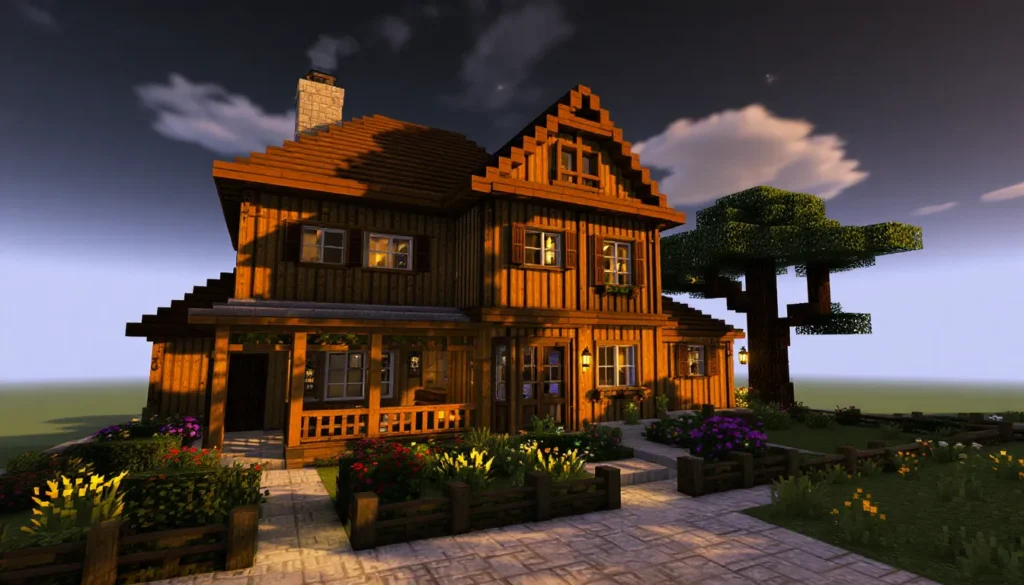
Building a farm house in Minecraft isn’t just about slapping four walls together and calling it a day. It’s about creating a self-sustaining base that’s equal parts functional and beautiful, a place where you can store your loot, grow your crops, and breed animals without everything looking like a cobblestone nightmare. Whether you’re starting a new survival world or renovating an existing base, a well-designed farm house becomes the beating heart of your entire operation.
The beauty of farm houses is their versatility. You can go full rustic with spruce wood and cobblestone, or blend modern materials like concrete and glass for a contemporary twist. But beyond aesthetics, a proper farm house setup streamlines your resource gathering, automates tedious tasks, and gives you a strategic advantage in survival mode. This guide walks through everything from location scouting to advanced multi-story designs, ensuring your farm house becomes more than just another structure, it becomes home.
Key Takeaways
- A Minecraft farm house centralizes your resources by combining crop fields, animal pens, and storage in one functional location, saving hours during survival gameplay.
- Choose flat terrain with nearby water, forests, and villages—plains, flower forests, and meadow biomes are ideal locations for building a farm house.
- Use contrasting materials like oak and spruce wood with stone blocks to add visual depth and avoid mono-material builds that look flat and boring.
- Integrate farming elements (crop fields, animal pens, and automated farms) during initial construction rather than adding them afterward for a cohesive agricultural compound.
- Plan a minimum footprint of 11×9 blocks for single-story designs and 13×11 for multi-story farm houses to ensure adequate space for kitchens, storage, bedrooms, and crafting areas.
- Add landscaping touches like pathways, perimeter fencing, lantern lighting, and flower gardens to transform your farm house from a basic structure into an immersive, lived-in homestead.
Why Build a Farm House in Minecraft?
A dedicated farm house solves one of Minecraft’s core challenges: resource management. Instead of scattering farms across your world or stuffing chests into random corners, a farm house centralizes everything. Your wheat, carrots, potatoes, and beetroot grow steps away from your storage. Animal breeding happens in organized pens rather than chaotic hillsides. When you’re prepping for a major build or gearing up for the End, that efficiency saves hours.
Beyond functionality, farm houses add personality to your world. A well-built farm base tells a story, it shows you’ve moved past the dirt hut phase and established yourself. It’s the difference between a temporary camp and a permanent settlement. Plus, farm houses naturally encourage expansion. Start with a simple cottage and crop field, then add barns, silos, windmills, and eventually an entire agricultural compound.
The aesthetic appeal matters too. Minecraft’s building palette works beautifully for rural architecture. Exposed wood beams, stone foundations, hay bale accents, and flower boxes create that cozy farmstead vibe that modern glass towers just can’t match. And if you’re playing multiplayer, a distinctive farm house becomes a recognizable landmark, somewhere friends know they can restock and trade.
Choosing the Perfect Location for Your Farm House
Location determines whether your farm house thrives or becomes a tedious commute. You want flat terrain for crop fields, but also enough variation for visual interest. Completely flat plains get boring fast, while extreme hills make expansion a nightmare. Look for gentle slopes or plains bordering other biomes, these transition zones offer the best of both worlds.
Biome Considerations
Plains and sunflower plains are classic farm house biomes for good reason. Flat land, abundant passive mobs for early food, and villages for trading make them ideal starter locations. Savanna biomes work similarly but offer acacia wood for unique color palettes. Avoid building directly in dark forests or swamps, the constant mob spawns and poor lighting make farming frustrating.
Flower forests and birch forests provide excellent middle-ground options. The terrain stays relatively flat while offering natural beauty without the monotony of pure plains. Meadow biomes, added in the Caves & Cliffs update, are underrated farm house locations, the rolling hills and flower coverage create stunning backdrops. Just watch for goat spawns if you’re building near cliffs.
Proximity to Resources
Your farm house needs water access within 100 blocks, preferably closer. Rivers, lakes, or ocean coastlines work perfectly. Water isn’t just for aesthetics: you’ll need it for crop hydration and infinite water sources for potion brewing and concrete production. Position your build so water features enhance rather than complicate construction.
Wood should be readily available. Even if you’re using primarily stone materials, you’ll consume stacks of wood for tools, fences, and interior furnishings. A forest within sprinting distance saves countless trips. Similarly, check for exposed stone or cave entrances nearby. Early-game stone gathering for foundations and pathways goes much faster when you’re not hauling cobblestone across 500 blocks.
Finally, consider village proximity. Having a village within 200-300 blocks gives you trading access without making your farm house feel like a suburb. You want enough distance to maintain that isolated farmstead atmosphere while keeping villagers accessible for toolsmiths, librarians, and armorers.
Essential Materials and Tools You’ll Need
Gathering materials before you start building prevents those annoying mid-construction gathering trips. For a medium-sized farm house (roughly 15×15 base with a second story), plan on at least 10 stacks of your primary building block, 5-6 stacks of wood planks, 3-4 stacks of glass, and 2-3 stacks of slabs and stairs.
Building Blocks and Aesthetic Choices
Oak planks and spruce planks form the backbone of most farm house designs. Oak provides that warm, classic look, while spruce offers darker contrast for beams and trim. Combine them for depth, spruce frames with oak walls, or vice versa. Strip the logs before crafting planks for smoother textures on support beams and corner posts.
Cobblestone and stone bricks anchor your build literally and visually. Use cobblestone for foundations and lower walls to create that sturdy farmhouse feel. Stone bricks work for chimneys, accent walls, or more refined sections. Mix in andesite or granite for texture variation, polished versions work for interior flooring.
White concrete or birch planks make excellent choices for modern farm house variants. Pair white concrete walls with dark oak trim for a contemporary aesthetic. Hay bales are essential decorative blocks, use them for exterior accents, barn storage areas, or even as hidden light sources (place them over glowstone). Terracotta in natural tones (white, light gray, orange) creates convincing roofing materials.
Don’t forget functional blocks: chests (at least 10-15), crafting tables (2-3 placed strategically), furnaces (4-6 for smelting efficiency), barrels for bulk storage, and composters to recycle plant materials. Trapdoors and doors eat up more materials than you’d think, grab 2 stacks of trapdoors for window shutters and decorative elements.
Tools for Efficient Construction
An iron or diamond axe with Efficiency III+ speeds up wood harvesting and placement corrections dramatically. You’ll break and replace blocks constantly during construction, a slow axe turns a fun project into a slog. Similarly, keep a pickaxe with at least Efficiency II ready for stone adjustments.
Scaffolding changed Minecraft building forever. Craft several stacks using bamboo and string, it’s the fastest way to reach roof heights and build upper stories. Unlike pillaring with blocks, scaffolding breaks instantly and doesn’t leave cleanup. If bamboo is scarce, ladders work but require more planning.
Bring shears for leaf gathering (great for organic decoration), water buckets for emergency lava protection and landscaping, and torches (at least 2 stacks) for interior lighting as you build. Building at night without proper lighting is asking for creeper interruptions. Many experienced builders stock their hotbar according to detailed building guides to optimize their workflow.
Step-by-Step Farm House Building Tutorial
Let’s build a classic two-story farm house with a front porch and attached barn. This design scales easily, shrink it for solo survival or expand it for multiplayer servers. The core structure measures 13×11 blocks (width x depth), providing enough space for functional rooms without becoming a resource drain.
Laying the Foundation and Base Structure
Start by clearing and flattening your build area. Use a hoe to create dirt paths outlining your 13×11 footprint, this prevents you from losing track while placing blocks. The foundation should extend one block beyond your walls on all sides, creating a slight overhang.
Build the foundation using cobblestone or stone bricks, 2 blocks tall. This raises your floor above ground level and prevents that sunken look. Fill the interior with dirt or cheaper blocks, nobody sees it, and it prevents mob spawning underneath if you’re building over a cave.
Place oak log or spruce log corner posts at all four corners, extending 5 blocks up from the foundation. Add posts every 4-5 blocks along longer walls for structural visual support. These vertical logs become your wall frames. At this stage, you’ve got a skeleton, foundation and corner posts, which makes visualizing the final structure much easier.
Constructing Walls and Adding Windows
Fill between your log posts with oak planks or your chosen wall material. Leave the logs exposed for that timber-frame aesthetic. On the front-facing wall, leave a 3-block-wide, 3-block-tall opening centered for your entrance. Flank it with single-block openings for windows, positioned 2 blocks up from the floor level.
Side walls should have 2-3 windows each, staggered for balance rather than symmetry. Make windows 1×2 or 2×2, larger windows need more structural support to look natural. Place oak trapdoors on all four sides of each window opening for shutters. This simple detail transforms basic holes into actual windows.
Add glass panes (not full blocks, panes look better for houses) to each window. For the entrance, place oak doors or spruce doors depending on your color scheme. Consider adding a small porch, extend your foundation forward 3 blocks, add a railing using oak fence, and top it with a small overhang using slabs or stairs.
The back wall connects to your barn or storage area, so leave an internal doorway opening if you’re building an attached structure. Otherwise, add windows matching the front for consistency.
Roof Design and Construction Techniques
Roof design separates amateur builds from polished ones. A gable roof (triangular cross-section) works perfectly for farm houses. Start by extending your wall height up 2 more blocks on the two shorter (11-block) sides to create gables. Build these gable ends in a pyramid shape using your wall material, narrowing to a peak.
Use oak stairs or spruce stairs for the actual roof surface, placing them in rows that meet at a central ridge. Begin at the bottom edge and work upward, each row stepping inward. The roof should overhang your walls by 1-2 blocks on all sides, this creates shadow depth and weather protection.
For added detail, use oak slabs along the roof edge (the overhang) to create gutters or a finished edge. Place spruce trapdoors under the overhang’s corners for decorative brackets. If your roof looks too plain, add a chimney on one gabled end using cobblestone or stone bricks, extending 3-4 blocks above the roof peak. Place a campfire inside for functional smoke effects.
Designing the Interior Layout
Interior design in Minecraft requires balancing functionality with aesthetics in tight spaces. A 13×11 footprint gives you roughly 140 blocks of floor space, enough for distinct rooms if you plan carefully. Avoid the temptation to cram everything into one open space: defined areas make your farm house feel intentional.
Kitchen and Dining Area
Position the kitchen along one wall, ideally near the entrance for easy access when returning from farming. Create a counter using oak slabs placed on top of oak fence posts, this creates a raised surface with visible legs underneath. Place furnaces into the wall behind the counter by removing wall blocks and inserting furnaces, then surrounding them with stone bricks for a built-in oven look.
Add a crafting table, smoker, and blast furnace to your kitchen wall for complete crafting access. Use barrels instead of chests under counters, they open even with blocks above them, allowing you to maximize vertical space. Place flower pots with flowers on counters for decoration, and hang lanterns from the ceiling using iron bars or chains.
The dining area needs just a table and seating. Build a table using oak fence posts topped with oak pressure plates or oak trapdoors (placed horizontal). For chairs, place oak stairs facing outward around the table. This setup takes minimal space but clearly defines a dining zone. Position this near a window for natural light during meals.
Bedroom and Storage Spaces
The bedroom goes upstairs or in a corner of the first floor, depending on your layout. A bed obviously, but add a chest at the foot for personal storage and an armor stand in the corner displaying your best gear. Place a painting on the wall, the RNG might give you something that fits the farm aesthetic perfectly.
Use oak trapdoors on the wall to simulate shuttered closet doors, with barrels or chests behind them for clothing storage (in roleplay terms). A small bedside table made from a single oak fence post with a pressure plate on top holds a lantern or flower pot.
Dedicate one wall or corner to organized storage. Stack chests two-high, labeling them mentally or using item frames with representative items. Group by category: building materials, farming supplies, tools and weapons, food, redstone components. Barrels work great for bulk storage of single items like cobblestone or dirt. Some builders reference storage organization systems to optimize their chest layouts for maximum efficiency.
If you’ve built a second story, install oak stairs in a corner leading up, protected by a fence or oak trapdoor railing. The upper floor becomes bedroom and storage, leaving the ground floor for kitchen, dining, and crafting.
Functional Farm Elements to Integrate
A farm house without actual farms is just a house. Integrating functional farming directly into your build creates a cohesive agricultural compound that actually serves survival needs. Plan these elements during initial construction rather than awkwardly adding them later.
Crop Fields and Automated Farms
Position crop fields within 20-30 blocks of your main building for convenience. Create elevated fields using grass blocks or dirt outlined with oak fencing to prevent trampling. Each field should be 9×9 with a water source in the center, this hydrates all farmland within 4 blocks.
Grow wheat, carrots, potatoes, and beetroot in separate fields for organization. Add a pumpkin and melon patch using the same principles but with empty space for fruit growth. Place scarecrows using hay bales, carved pumpkins, and oak fences as decorative focal points between fields.
For automation, build a simple villager crop farm. Enclose a 9×9 field with fences, place composters to assign farmer villagers, and toss stacks of seeds to the villagers. They’ll plant and harvest automatically, throwing surplus crops that you collect with hopper systems. This requires villager trading hall knowledge but dramatically reduces farming tedium.
Semi-automatic bamboo and sugarcane farms fit perfectly near water features. Plant bamboo or sugarcane along riverbanks, place observers facing the plants with pistons above them. When plants grow to maximum height, pistons auto-harvest the top blocks. Collect with water streams flowing into hoppers and chests.
Animal Pens and Breeding Areas
Build animal pens adjacent to your farm house using oak fence enclosures. Create separate pens for cows, pigs, sheep, and chickens, mixing them looks chaotic and makes breeding management harder. Each pen should be at least 7×7 to prevent overcrowding and allow comfortable breeding.
Add gates for access and place hay bales in corners as feeding stations (decorative, but looks purposeful). Use oak trapdoors or carpets on fence posts to create the illusion of cross-braces. Light the pens well with lanterns on fence posts to prevent mob spawning inside.
For chickens, build a small coop structure attached to your main barn, a 5×5 building with nesting boxes made from barrels or chests elevated on fences. Place trapdoors above the barrels to simulate nesting box lids. Chickens pathfind onto the trapdoors, and it looks like they’re actually roosting.
Bee hives deserve space near flower gardens. Place bee nests or bee hives against your barn wall with campfires underneath (covered with trapdoors or carpets to hide smoke). Plant flowers nearby for bee productivity. Use glass panes to create a protective screen if you’re worried about aggro.
Storage Barns and Tool Sheds
Attach a barn structure to your main house using a covered breezeway or direct connection. The barn should be larger, perhaps 15×10, with high ceilings (8-10 blocks) to store bulk items and create that cavernous barn feeling. Use spruce wood and cobblestone for visual distinction from the main house.
Inside the barn, create hay storage by stacking hay bales to the ceiling in corners. Add chest walls for mass storage of farming overflow, seeds, excess crops, and breeding materials. Place anvils, grindstones, and smithing tables in one corner for tool maintenance and repair.
Build item frames displaying tools (hoes, axes, shovels) on walls between storage for that authentic tool shed aesthetic. Hang lanterns from chains attached to the ceiling for atmospheric lighting. Add a loft using oak slabs for a second storage level, accessible by ladders.
Advanced Farm House Design Ideas
Once you’ve mastered basic farm house construction, advanced designs add uniqueness and scale. These builds require more resources and planning but transform your base from functional to stunning.
Multi-Story Farm Houses
Three-story farm houses create impressive silhouettes without requiring massive footprints. The ground floor handles cooking, dining, and crafting. The second floor contains bedrooms and personal storage. The third floor becomes an attic or observatory with 360-degree windows for monitoring your lands.
Structurally, multi-story builds need reinforcement. Place full oak logs at corners extending through all floors for visual continuity. Each floor should have slightly different window arrangements to avoid repetitive facades. The second floor might have smaller windows, while the attic uses glass panes extensively for light.
Add balconies on upper floors using oak fences and slabs. A small second-story balcony overlooking crop fields serves no functional purpose but looks incredible at sunrise. Access the third floor via a spiral staircase built in a corner tower, this adds architectural interest and saves interior space.
Basements work well if you’re building on a slope. Excavate beneath your foundation, creating a cellar for storage, brewing, or enchanting. Use stone bricks and cobblestone for walls and oak barrels for wine cellar aesthetics. This hidden space keeps your main floors clean while adding secret depth to your base.
Rustic vs. Modern Farm House Styles
Rustic farm houses lean into medieval aesthetics, heavy timber frames, stone foundations, asymmetrical additions, and organic shapes. Use stripped oak logs, cobblestone, spruce planks, and dark oak trapdoors. Roofs should be steep with lots of overhang. Add imperfections: a slightly crooked fence, a ramshackle tool shed, weathered paths. Rustic builds embrace irregularity.
Decorate with barrels, hay bales, lanterns, flower pots, item frames showing tools, and paintings. Weathering effects using cobblestone walls, mossy cobblestone, and vines add age. Build a well using cobblestone rings and an oak fence frame with a chain descending into water.
Modern farm houses blend contemporary architecture with agricultural function. Think white concrete walls, dark oak or blackstone accents, large glass pane windows, and flat or low-slope roofs. Use quartz, smooth stone, and polished materials for clean lines. The aesthetic says “farmhouse chic” rather than traditional barn.
Lighting shifts from lanterns to sea lanterns hidden behind white concrete or glowstone under carpets. Furniture becomes minimalist, quartz stairs for seating, white concrete counters, glass panes as room dividers. The crop fields might use concrete borders instead of fences, and animal pens could feature iron bars over wood.
Hybrid styles combine elements from both. A rustic exterior with modern interior, or modern structural shell with rustic decorative elements. The modding community on platforms like Nexus Mods offers texture packs and decoration mods that can enhance either aesthetic dramatically.
Landscaping and Exterior Decoration Tips
The area surrounding your farm house matters as much as the structure itself. Thoughtful landscaping transforms a building into a lived-in homestead. This is where many builders stop too early, don’t make that mistake.
Gardens, Pathways, and Fencing
Flower gardens belong near entrances and under windows. Plant roses, tulips, peonies, and sunflowers in organized clusters, outlining them with grass paths or coarse dirt. Place composter boxes disguised as planters in corners. Use oak trapdoors to create decorative garden bed borders.
Create pathways connecting your farm house to fields, barns, and other structures using grass paths (right-click dirt with a shovel). Outline paths with cobblestone or stone bricks for definition. Add lanterns on oak fences every 8-10 blocks along paths for lighting and visual rhythm.
Perimeter fencing defines your property and prevents mob intrusion. Use oak fence or spruce fence depending on your palette, running it around your entire compound. Add gates at path intersections. Place lanterns on fence posts at corners and gates for lighting. Don’t fence too tightly around buildings, leave 5-10 blocks of breathing room.
Build stone walls (the decorative variant, not fence) along property boundaries for a more established look. Alternate cobblestone walls with stone brick walls for texture. Cap wall posts with lanterns, flower pots, or stone buttons for detail.
Lighting and Ambiance
Lanterns should be your primary light source for farm houses, they fit the aesthetic better than torches. Hang them from chains under eaves, place them on fence posts along paths, and position them inside windows for warm glows at night. Campfires (regular or soul campfires for blue light) work wonderfully in gathering areas.
Jack o’lanterns hidden inside hay bales or behind trapdoors provide invisible lighting while preventing mob spawns. This technique works perfectly for illuminating crop fields without breaking immersion. Place jack o’lanterns, then cover with your decorative block.
Add ambiance particles using campfires under hay bales (smoke rises through them creating atmospheric effects). Water features, ponds, fountains, or small streams, add movement and sound. Build a simple fountain in your courtyard using a stone brick pedestal with water source blocks flowing down into a pool.
Consider custom trees if natural spawns don’t fit your vision. Plant oak saplings or spruce saplings strategically, removing and replanting until you get desired shapes. Place leaf blocks manually to create fuller canopies. A large oak tree near your entrance becomes a natural focal point.
Finally, add seating areas outside, a small patio with oak stairs around a campfire, or a bench made from oak stairs and oak slabs under a tree. These details make your farm house feel inhabited rather than just constructed.
Common Mistakes to Avoid When Building
Even experienced builders fall into predictable traps when constructing farm houses. Recognizing these mistakes beforehand saves resources and frustration.
Building too small tops the list. New players consistently underestimate space requirements. A 7×7 farm house feels cramped the moment you add chests, furnaces, and crafting stations. Err on the side of larger, you can always partition excess space into storage rooms or decorative areas. A good minimum is 11×9 for single-story, 13×11 for multi-story builds.
Ignoring lighting leads to mob spawns inside your own base. Every block needs light level 8+ to prevent spawns in Java Edition (light level 0 in Bedrock Edition for most mobs). Place lighting as you build, not afterward. Interior spaces need lights every 8-10 blocks minimum. Exterior areas, especially animal pens and crop fields, need regular lanterns or hidden jack o’lanterns.
Poor window placement creates ugly facades. Windows clustered too close look crowded: too far apart makes walls feel bare. Use the rule of thirds, divide walls mentally into thirds and place windows at intersection points. Avoid placing windows directly in corners or centered on odd-numbered walls (it looks off-balance). Always leave at least 2 blocks between window edges and corners.
Flat roofs scream “beginner build” unless you’re deliberately going modern. Even simple gable roofs add dimension and shadow. If flat roofs fit your style, at least add a parapet (raised edge) using slabs or walls to create definition. Overhangs matter too, roofs flush with walls look unfinished.
Mono-material syndrome produces boring builds. Using only oak planks or only cobblestone creates texture-less blobs. Mix at least 2-3 materials, wood and stone, light and dark woods, smooth and textured blocks. Contrast creates visual interest. A spruce beam against an oak wall, cobblestone foundations under wood walls, these combinations add depth.
Neglecting scale and proportion results in awkward structures. Walls shouldn’t be shorter than 4 blocks or taller than 6 blocks for standard farm houses (basements and attics excepted). Doors and windows need appropriate spacing, a 2-block-tall door in a 4-block-tall wall leaves only 1 block above for structure, which looks squashed. Similarly, massive 10×10 windows in a small cottage look ridiculous.
Building directly on spawn chunks causes lag in multiplayer or when returning from other dimensions. Your farm house will constantly run, simulating crops and animals. This is fine for single-player but can cause server stress. Check spawn coordinates and build at least 200-300 blocks away if performance matters.
Forgetting future expansion locks you into your initial footprint. Leave space around your farm house for additions, a barn, silo, windmill, or second cottage. Plan your layout with empty space incorporated. Cramming everything together initially means painful relocation later when you want to expand.
Conclusion
A well-designed Minecraft farm house becomes the foundation of your entire survival experience. It’s where you’ll spend hundreds of hours crafting, smelting, organizing storage, and planning your next adventure. Unlike temporary shelters or purely functional boxes, a thoughtfully built farm house grows with you, starting as a simple cottage and expanding into a sprawling agricultural estate.
The key is balancing form and function from the beginning. Choose materials that match your aesthetic vision while ensuring you’ve got enough resources to complete the build. Plan your location for both beauty and practicality. Integrate farms, storage, and crafting stations during construction rather than retrofitting them later. And most importantly, don’t be afraid to tear down and rebuild sections that don’t feel right. Even the best builders iterate.
Your farm house tells the story of your world. Whether you’ve gone rustic with heavy timber and stone, embraced modern minimalism with concrete and glass, or created a hybrid style uniquely your own, the time invested in proper construction pays dividends every single session. Now grab your materials, find that perfect plains biome, and start building the farm house you’ll actually want to come home to.