
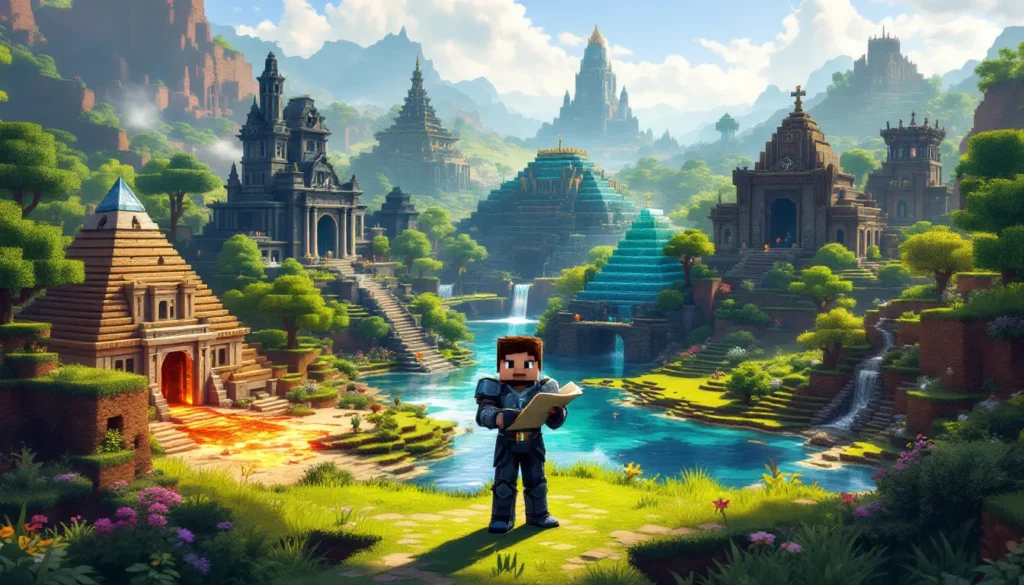
Structures are the backbone of Minecraft’s exploration and progression systems. Whether you’re hunting for an Elytra in End Cities or looting a Bastion Remnant for Ancient Debris, every structure offers unique rewards, challenges, and opportunities. In 2026, with multiple updates refining spawn rates, loot tables, and generation algorithms, understanding where to look, and what to do when you get there, matters more than ever.
This guide breaks down every major structure across all three dimensions: Overworld, Nether, and End. You’ll learn what they contain, how to find them efficiently, and how to maximize your loot runs. We’ll also cover building your own structures and share advanced strategies for players who’ve moved past the basics. No fluff, no filler, just the data and tactics you need to dominate.
Key Takeaways
- Minecraft structures span three dimensions with unique rewards: villages and temples offer early-game loot, Nether fortresses provide Blaze Rods and Nether Wart for progression, and End Cities contain Elytra and Shulker Boxes for late-game exploration.
- Strongholds are essential to beating Minecraft, as they’re the only source of End Portals needed to fight the Ender Dragon; locate them by throwing Eyes of Ender crafted from Blazes.
- Bastion Remnants are the primary renewable source of Ancient Debris for Netherite gear, with Treasure Room variants containing the highest-value loot and requiring gold armor to safely navigate Piglins.
- Use the /locate structure command in creative or with cheats to find any structure instantly, or purchase exploration maps from Cartographer villagers to discover Ocean Monuments and Woodland Mansions efficiently.
- Speed runners optimize structure routes by systematically looting shipwrecks, villages, and bastions before rushing fortresses and strongholds to beat the game in under 20 minutes using RNG manipulation and seed scouting.
- Build your own functional and aesthetic structures by planning for scale and function, gathering bulk resources using Fortune III and farms, and testing layouts in creative mode before committing to large survival builds.
What Are Minecraft Structures?
In Minecraft, structures are pre-generated formations that appear across the game’s three dimensions. They range from simple desert wells to sprawling strongholds with End Portals. Each structure serves a different purpose: some offer loot, others provide NPCs for trading, and a few are essential for progression.
Structures fall into two main categories: naturally generated and player-built. While the former spawns automatically during world generation, the latter depends entirely on player creativity and resource investment.
Naturally Generated vs. Player-Built Structures
Naturally generated structures are coded into the game’s world generation algorithm. These include villages, temples, fortresses, and monuments. They’re scattered across biomes based on specific spawn rules, Desert Temples only appear in desert biomes, for instance, while Ocean Monuments spawn exclusively in deep ocean zones.
Spawn rates and distributions have been tweaked in recent updates. As of Java Edition 1.21 and Bedrock Edition 1.21.50 (released in late 2025), structure spacing and frequency have been adjusted to reduce overcrowding in certain biomes while improving discovery rates in others.
Player-built structures are anything you construct manually. These can be simple starter houses or massive multi-biome builds with redstone automation. While they don’t offer inherent progression benefits, they’re essential for long-term survival, storage, and aesthetic achievement.
Why Structures Matter for Survival and Progression
Structures aren’t just for aesthetics, they’re critical for progression. Strongholds contain the End Portals needed to fight the Ender Dragon. Nether Fortresses provide Blaze Rods for brewing and Eyes of Ender. Villages offer early-game trades that accelerate tool and armor upgrades.
Loot from structures can dramatically shorten early-game grind. A single Desert Temple can yield diamonds, TNT, and enchanted books. Shipwrecks drop treasure maps that lead to buried chests with Heart of the Sea, essential for crafting Conduits. Without engaging with structures, you’re ignoring half of Minecraft’s progression loop.
Overworld Structures: Complete Breakdown
The Overworld is packed with structures, each tied to specific biomes and offering distinct rewards. Whether you’re a new player hunting for iron or a veteran farming for rare enchantments, knowing what each structure contains, and where to find it, is essential.
Villages: Types, Loot, and Trading Opportunities
Villages spawn in plains, desert, savanna, taiga, snowy tundra, and snowy taiga biomes. Each village type has unique building styles and loot tables. Plains villages tend to have the most farmers, while desert villages often spawn with more blacksmiths.
Villagers are the core reason to visit villages. Trading with them unlocks enchanted diamond gear, rare potions, and even Mending books. As of 1.21, villager trades have been rebalanced to make certain high-value trades (like Mending) slightly rarer but more reliable when found.
Loot chests in villages contain:
- Blacksmith chests: Iron ingots, diamonds (rare), obsidian, iron tools
- General chests: Bread, seeds, apples, occasional iron
- Weaponsmith chests: Iron swords, axes, sometimes enchanted gear
Protecting villages from raids is worth the effort. Defending successfully grants the Hero of the Village effect, which dramatically reduces trade costs and can stack for multiple discounts.
Temples and Pyramids: Desert and Jungle Treasures
Desert Temples are pyramid structures with a hidden chamber beneath the main floor. The chamber contains four loot chests and a TNT trap activated by a pressure plate in the center. Many players overlook the importance of walkthroughs for safe looting when approaching these traps for the first time.
Loot includes:
- Diamonds (common)
- Enchanted books
- Emeralds
- Iron ingots
- TNT (9 blocks per temple)
Jungle Temples feature three floors with puzzle mechanisms. The ground floor has a lever puzzle that unlocks chests containing:
- Diamonds
- Emeralds
- Iron ingots
- Enchanted books
The basement has a dispenser trap with arrows and another chest. Both temples are relatively common in their respective biomes, making them excellent early-game loot targets.
Pillager Outposts and Woodland Mansions
Pillager Outposts spawn in plains, desert, taiga, and savanna biomes. They’re dark oak towers surrounded by Pillagers. Killing the captain (identified by the banner on its head) triggers the Bad Omen effect, which starts a raid when entering a village.
Outposts contain:
- Iron tools and armor
- Crossbows (always)
- Dark oak logs
- Limited food supplies
They’re less about loot and more about starting raids for totems of undying and other raid-specific drops.
Woodland Mansions are massive, rare structures found only in dark forest biomes. They contain multiple rooms with unique layouts, including prison cells, altars, and storage rooms. Mansions spawn Vindicators, Evokers, and sometimes Vexes.
Loot includes:
- Totems of Undying (from Evokers)
- Diamond blocks (rare room)
- Enchanted golden apples
- Music discs
- Diamonds and emeralds
Mansions are so rare that using a /locate mansion command or a map from a cartographer villager is the most efficient discovery method.
Ocean Monuments and Shipwrecks
Ocean Monuments are underwater fortresses made of prismarine. They spawn in deep ocean biomes and are guarded by Guardians and Elder Guardians. Defeating all three Elder Guardians removes the Mining Fatigue III debuff they inflict.
Rewards:
- 8 gold blocks in the treasure room
- Prismarine blocks and shards
- Sponges (from Elder Guardian drops and sponge rooms)
- Sea lanterns
Shipwrecks are partially destroyed ships found in oceans, beaches, and rivers. They contain up to three chests:
- Supply chest: Food (carrots, potatoes, suspicious stew)
- Treasure chest: Emeralds, diamonds, iron, treasure maps
- Map chest: Buried treasure maps (most valuable)
Buried treasure maps lead to Buried Treasure chests, which always contain a Heart of the Sea plus diamonds, emeralds, and iron. Finding these is essential for crafting Conduits.
Mineshafts, Dungeons, and Strongholds
Abandoned Mineshafts generate underground and in badlands biomes (where they can appear above ground). They’re sprawling tunnel networks with minecart chests containing:
- Iron ingots
- Coal
- Gold ingots
- Rails and minecarts
- Melon and pumpkin seeds
- Enchanted books (rare)
Cave spiders spawn from monster spawners in mineshafts, making them more dangerous than typical caves.
Dungeons are small cobblestone rooms with a mob spawner (zombie, skeleton, or spider) and one or two chests. They spawn underground in all biomes. Loot is basic:
- Iron ingots
- Wheat
- String
- Saddles (rare)
- Music discs (rare)
Dungeons are most valuable for the spawner itself, which can be converted into an XP or mob farm.
Strongholds are essential for progression. They’re large underground structures containing the End Portal room. Players locate them using Eyes of Ender, which fly toward the nearest stronghold when thrown.
Strongholds contain:
- Libraries with bookshelves and chests (enchanted books)
- Storage rooms with random loot
- Altar rooms with iron bars and torches
- The End Portal frame (requires 12 Eyes of Ender to activate)
Every world generates 128 strongholds, but only three are close to spawn in older versions. Modern versions spread them more evenly.
Nether Structures: Surviving the Fiery Depths
The Nether is home to three major structure types introduced or refined in the Nether Update (1.16) and subsequent patches. Each offers critical resources for progression, from brewing to Ancient Debris farming.
Nether Fortresses: Finding Blaze Rods and Nether Wart
Nether Fortresses are sprawling bridge and corridor structures made of nether brick. They’re the only place to find Blazes and Nether Wart naturally, making them non-negotiable for progression.
Blaze Rods are required for:
- Brewing stands (to craft potions)
- Eyes of Ender (to locate strongholds and activate End Portals)
Nether Wart grows in fortress stairwell rooms and is the base ingredient for all potions.
Fortresses also contain:
- Corridor chests: Iron ingots, gold ingots, diamonds (rare), Flint and Steel
- Nether Wart (in soul sand gardens)
- Spawners for Blazes and Wither Skeletons
Wither Skeletons drop Wither Skeleton Skulls (rare, 2.5% base drop rate, improved with Looting). You need three skulls to summon the Wither boss.
Fortresses generate along the Z-axis in Bedrock Edition and more randomly in Java Edition. Traveling along the X-axis in Bedrock increases discovery rates.
Bastion Remnants: Ancient Debris and Piglin Bartering
Bastion Remnants are blackstone structures inhabited by Piglins and Piglin Brutes. They come in four variants:
- Housing Units (common loot chests)
- Stables (many chests, less valuable loot)
- Treasure Rooms (gold blocks and high-value loot)
- Bridge Bastions (fewer chests, good for speed runs)
Loot includes:
- Ancient Debris (rare, mainly in Treasure Rooms)
- Netherite upgrade templates
- Enchanted diamond gear
- Gold blocks and ingots
- Crying obsidian
- Magma cream and fire resistance potions
Piglin Brutes don’t barter and attack on sight, even if you’re wearing gold armor. Piglins will aggro if you open chests, mine gold blocks, or attack them. Wearing at least one piece of gold armor prevents unprovoked attacks from regular Piglins.
Bastions are the best source of gold for bartering and the only renewable source of Ancient Debris via chest loot.
Ruined Portals: Quick Access and Early-Game Loot
Ruined Portals spawn in both the Overworld and Nether. They’re partial nether portal frames surrounded by crying obsidian, netherrack, and magma blocks. Some are buried underground or underwater.
Loot chests contain:
- Gold ingots and nuggets
- Obsidian
- Flint and steel
- Enchanted golden tools
- Golden apples
They’re useful for early-game access to the Nether if you lack a diamond pickaxe, since some spawn with enough obsidian to complete a portal. The crying obsidian can’t be used for portals but is required for respawn anchors.
End Structures: Conquering the Final Dimension
The End contains the game’s most valuable loot, locked behind the Ender Dragon fight and the vast outer islands. Structures here reward players who’ve completed the main progression loop.
End Cities and End Ships: Elytra and Shulker Boxes
End Cities spawn on the outer End islands after defeating the Ender Dragon. They’re tall towers made of purpur blocks and end stone bricks, guarded by Shulkers.
Loot includes:
- Enchanted diamond and iron gear
- Diamonds and emeralds
- Iron ingots
- Ender pearls
Some End Cities spawn with an End Ship floating nearby. End Ships contain:
- Elytra (guaranteed in the item frame)
- Dragon head (decorative block)
- Brewing stands with potions
- Two loot chests with enchanted gear
The Elytra is the single most valuable item in Minecraft, enabling flight with firework rockets. It’s essential for efficient travel and late-game exploration. Players seeking build optimization guides often prioritize Elytra runs before tackling mega-builds.
Shulkers drop Shulker Shells, which craft into Shulker Boxes, portable chests that retain their inventory when broken. These are game-changing for storage and transportation.
The End Portal and Dragon Fight Arena
The End Portal is located in a stronghold and requires 12 Eyes of Ender to activate. Once activated, it teleports players to the central End island, where the Ender Dragon fight takes place.
The arena features:
- Obsidian pillars with End Crystals (heal the dragon unless destroyed)
- The exit portal (activates after defeating the dragon)
- The dragon egg (spawns on the exit portal after the first kill)
Defeat rewards:
- 12,000 XP (first kill)
- Elytra access via End Gateway portals to outer islands
- Dragon egg (decorative, one per world)
Respawning the dragon requires placing four End Crystals on the exit portal. This grants another 500 XP but no additional dragon egg.
How to Locate Structures Efficiently
Exploration can be slow and tedious without the right approach. Whether you’re using commands, seeds, or manual scouting, efficient structure hunting saves hours.
Using Commands and Coordinates
For players in creative mode or with cheats enabled, the /locate structure command is the fastest method. As of Java Edition 1.21, the syntax is:
/locate structure minecraft:[structure_name]
For example:
/locate structure minecraft:village/locate structure minecraft:stronghold/locate structure minecraft:fortress
The command returns coordinates and distance. Use F3 (Java) or the coordinates toggle (Bedrock) to navigate.
For survival purists, this method is off-limits, but it’s invaluable for content creators, speed runners, and players testing builds.
Maps, Exploration, and Seed Selection
Cartographer villagers sell maps for Ocean Monuments and Woodland Mansions. These maps appear blank until you enter the exploration radius, at which point the structure’s location is marked.
Manual exploration works best with:
- A fast mode of travel (horse, boat, or Elytra)
- Bread or easy food for hunger management
- Torches and basic tools for emergencies
Seed selection is a meta strategy. Many modding communities share curated seed lists with multiple structures near spawn. Websites like Chunkbase offer interactive seed maps showing structure locations based on your seed and version.
For speed running or challenge runs, picking a seed with a village, stronghold, and fortress within 1,000 blocks of spawn cuts hours from progression time.
Building Your Own Structures: Tips and Ideas
Player-built structures are where Minecraft’s creative potential truly shines. From functional farms to massive citadels, the only limit is your imagination, and resource availability.
Planning and Resource Gathering
Before breaking ground, decide:
- Function: Is this a storage hub, mob farm, or purely aesthetic build?
- Scale: Small starter base or multi-biome mega-build?
- Materials: Wood, stone, concrete, or advanced blocks like prismarine and blackstone?
Resource gathering is the bottleneck. For large projects:
- Use Fortune III on diamond and emerald ore
- Build tree farms or bamboo farms for sustainable wood
- Harvest sand and gravel in bulk for concrete production
- Use TNT dupers (Java Edition) or manual mining for large-scale terraforming
Keep a checklist. Running out of materials mid-build kills momentum.
Creative Building Techniques and Inspiration
Some techniques elevate builds from basic to jaw-dropping:
- Layering and depth: Use stairs, slabs, and fences to add texture to walls
- Palette variation: Mix 2-3 complementary blocks (e.g., oak, spruce, cobblestone) instead of single-block walls
- Lighting: Hide glowstone or sea lanterns behind carpets, or use lanterns and torches for ambient lighting
- Terraforming: Reshape terrain around your build to integrate it naturally
For inspiration, browse community builds on YouTube, Reddit’s r/Minecraft, or world download sites. Many players share schematic files compatible with tools like Litematica or WorldEdit.
Experiment in creative mode first. Testing layouts and block palettes costs nothing there and prevents resource waste in survival.
Advanced Structure Strategies for Veteran Players
Once you’ve mastered the basics, optimizing your approach to structures becomes a game of efficiency and min-maxing. Veteran players use these strategies to cut time and maximize output.
Speed-Running Structure Routes
Speed runners use optimized structure routes to beat the game in under 20 minutes. Key strategies include:
- Shipwreck and Ruined Portal hunting: Provides early iron, food, and potential Nether access
- Village looting: Target blacksmith chests for obsidian, iron, and sometimes diamonds
- Bastion rushing: Grab gold blocks and enchanted gear before heading to a fortress
- Fortress efficiency: Kill only enough Blazes for rods (typically 6-7), then leave
- Stronghold triangulation: Throw Eyes of Ender from two points 1,000+ blocks apart to pinpoint the stronghold faster
In competitive speed running, RNG manipulation and seed scouting are common. Runners reset worlds until they spawn near optimal structures.
Maximizing Loot and Efficiency
Loot farming isn’t just about finding structures, it’s about clearing them efficiently:
- Use Looting III swords: Increases mob drop rates (essential for Wither Skeleton skulls and Shulker shells)
- Bring Ender Chests: Store valuable loot remotely to avoid losing it on death
- Mark coordinates: Write down or screenshot structure locations for repeat visits
- Farm Ocean Monuments systematically: Drain the monument with sponges or TNT to farm Guardians safely
- Automate what you can: Set up gold farms near Nether portals for bartering, or create Guardian farms at monuments
For Desert Temples and Jungle Temples, memorize chest locations to speed-run them in under 30 seconds. In Bastions, know which variant you’re in and head straight for treasure rooms or gold block piles.
Veteran players also use structure-based farms:
- Guardian farms (Ocean Monuments)
- Blaze farms (Nether Fortresses)
- Raid farms (Pillager Outposts)
- Enderman farms (End islands)
These turn exploration targets into renewable resource generators.
Conclusion
Structures are Minecraft’s most rewarding exploration mechanic. They drive progression, provide loot, and offer countless opportunities for creativity and challenge. Whether you’re looting your first Desert Temple or farming Shulker shells in the End, understanding how structures work, and how to exploit them, separates casual players from veterans.
Focus on the structures that match your current goals. Early game? Hit villages and temples. Mid-game? Fortresses and Bastions. Late-game? End Cities and Monument farms. Master the basics, then optimize.
Now get out there and explore. Your next game-changing loot chest is waiting.