
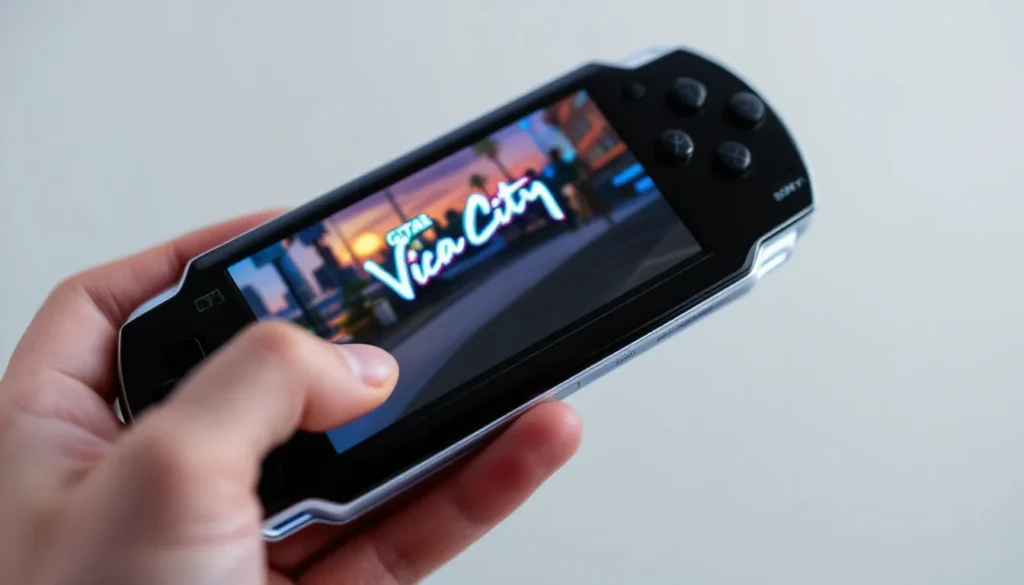
Released in 2006, GTA Vice City Stories brought the neon-soaked streets of Vice City to the PSP in a way that felt surprisingly complete. Unlike many handheld ports that cut corners, Rockstar Leeds delivered a full-scale GTA experience with new mechanics, a fresh protagonist, and enough content to justify dozens of hours on the go. Whether you’re revisiting Victor Vance’s story or discovering it for the first time, this guide breaks down everything you need to dominate Vice City on Sony’s handheld. From mastering the PSP’s control quirks to building a criminal empire and chasing 100% completion, we’re covering the essential strategies, hidden secrets, and modern ways to play in 2026.
Key Takeaways
- GTA Vice City Stories for PSP delivers a complete open-world experience with empire-building mechanics that distinguish it from other handheld GTA titles.
- The game’s control scheme requires practice with PSP’s single analog stick, but lock-on aiming and strategic camera adjustments make combat and driving manageable once mastered.
- Empire-building is essential for both making money and achieving 100% completion, with strategic location selection and managed defense missions generating significant passive income.
- The story features 30 missions across distinct arcs, with several notorious difficulty spikes like ‘Hose the Hoes’ and ‘Light My Pyre’ that demand specific weapon loadouts and techniques.
- Modern emulation via PPSSPP offers the best way to play Vice City Stories in 2026, enabling dual-analog controls, 4K graphics upscaling, and smooth 60fps performance on modern hardware.
- Collecting all 99 red balloons unlocks a $1,000,000 reward and infinite sprint, while unique jumps and rampages round out a robust completion checklist beyond the main storyline.
What Is GTA Vice City Stories for PSP?
GTA Vice City Stories is a prequel to the iconic Vice City, set in 1984, two years before Tommy Vercetti’s rampage. Developed exclusively for the PSP by Rockstar Leeds (the team behind Liberty City Stories), it launched on October 31, 2006, and later received a PS2 port in March 2007.
The game stands as one of the most ambitious handheld titles of its generation, offering open-world chaos, vehicle variety, and mission structure that rivaled console entries. It refined many systems introduced in Liberty City Stories while adding the empire-building mechanic that became its signature feature.
The Story Behind Victor Vance
Victor Vance is a soldier stationed at Fort Baxter in Vice City, trying to support his dysfunctional family back home. Unlike most GTA protagonists who embrace the criminal lifestyle, Vic starts reluctantly, dishonorably discharged after being set up by a corrupt commanding officer.
What follows is a descent into Vice City’s underworld as Vic builds connections with the Mendez brothers, works for various criminal factions, and eventually crosses paths with familiar faces from Vice City. His brother Lance Vance plays a significant role, and keen-eyed players will spot connections to the events of the original game.
The narrative hits harder than expected for a handheld title. Vic’s motivations feel grounded, and the 1980s setting delivers the same Miami Vice aesthetic with pastel suits, synth-heavy radio stations, and period-accurate vehicles.
How Vice City Stories Differs from Vice City
While both games share the same map, Vice City Stories isn’t just a reskin. The 1984 timeline means certain areas look different, under construction or less developed. Some islands are initially locked, and progression feels more structured than the original’s wide-open approach.
The empire-building system is the biggest gameplay departure. Players acquire and manage businesses across Vice City, defending them from rival gangs while generating passive income. It’s a proto-version of mechanics that would later appear in games like Saints Row 2.
Mission structure evolved too. Side activities are more integrated, and the game expects players to juggle empire management alongside story progression. Vehicle handling feels slightly tighter, and the PSP’s technical limitations led to some draw distance adjustments, though the core experience remains intact.
Combat also received tweaks. Melee fighting is more responsive, and certain weapons behave differently due to balancing changes. The overall difficulty curve skews slightly harder than Vice City, with some late-game missions demanding precision the original didn’t require.
Getting Started: PSP Controls and Gameplay Basics
The PSP’s single analog stick presents the biggest hurdle for newcomers. Rockstar Leeds adapted the control scheme intelligently, but it requires adjustment if you’re coming from console or modern dual-stick setups.
Mastering the PSP Control Scheme
Movement uses the analog stick, while camera control relies on the D-pad or the shoulder buttons in certain contexts. Many guides on handling classic controls emphasize getting comfortable with manual camera adjustment, since the game lacks the smooth camera tracking of modern third-person titles.
Key control mappings:
- Analog stick: Character movement, vehicle steering
- X button: Sprint, accelerate in vehicles, confirm
- Circle button: Attack, shoot, reverse in vehicles
- Square button: Jump, handbrake
- Triangle button: Enter/exit vehicles, pick up items
- L button: Target lock, fine aim
- R button: Look behind, secondary camera
- D-pad: Camera adjustment, weapon switching
Aiming takes practice. The lock-on system helps, but manual aiming with L+R while strafing is essential for harder missions. Set aside time in the early game to practice drive-bys and on-foot combat before story missions demand it.
One trick: tap the analog stick lightly for precise aiming adjustments. The PSP’s stick has a dead zone, so gentle inputs matter more than aggressive movements.
Essential Gameplay Mechanics You Need to Know
Beyond basic controls, several systems govern Vice City Stories’ gameplay flow.
Wanted Level works identically to other GTA games. Stars accumulate as you commit crimes, with police response escalating from cops on foot to SWAT teams and eventually the military at six stars. Pay ‘n’ Spray locations remove heat, but you need to break line of sight first.
Health and Armor spawn at consistent locations. Pizza shops restore health, while body armor pickups appear near safehouses and empire sites. Stock up before difficult missions, there’s no quick retry option, and some missions lack checkpoints.
Saving happens at safehouses and after certain mission completions. The game doesn’t autosave frequently, so manual saves after empire expansions or progress milestones prevent frustration.
Vehicle durability matters more here than in some GTA entries. Cars catch fire fast, and explosions happen with little warning. Keep an eye on the vehicle health indicator and bail early when flames appear.
Swimming is possible, unlike GTA III and Vice City. Vic won’t drown instantly, but stamina depletes in water. Some missions involve boat chases and waterside objectives, so comfortable swimming is non-negotiable.
Main Story Missions and Walkthrough Tips
The story spans roughly 30 missions across multiple faction storylines. Progression unlocks new islands, empire opportunities, and equipment, so rushing isn’t advisable, many later missions expect upgraded arsenals and owned businesses.
Key Story Arc Progression
The campaign divides into distinct phases:
- Fort Baxter and Early Setup (Missions 1-6): Tutorial missions and Vic’s discharge. Low difficulty, introduces basic mechanics.
- Marty Jay Williams Arc (Missions 7-10): Working for a trailer park loan shark. Introduces empire mechanics.
- Mendez Brothers (Missions 11-20): The meat of the story. Vic becomes entangled with Vice City’s major drug traffickers. Difficulty ramps significantly.
- Phil Collins and Late-Game (Missions 21-30): Yes, real-life Phil Collins appears. Final missions involve large-scale gang wars and high-intensity vehicle sequences.
Unlike Vice City’s open structure, these arcs are more linear. You’ll occasionally have mission choices, but the critical path is clear. Side missions and empire-building can happen anytime, but certain story missions lock until you’ve completed prerequisites.
Pacing feels tighter than the original Vice City. There’s less downtime between major story beats, and the game pushes you toward empire expansion as a parallel progression system rather than an optional distraction.
Difficult Missions and How to Beat Them
Several missions develop reputations for frustration. Here’s how to handle the worst offenders:
“Boomshine Blowout”: An early mission involving a burning building and rescuing Marty’s workers. The timer is tight, and fire spreads fast. Memorize the building layout on the first attempt, prioritize the workers farthest from the entrance, and don’t stop moving. One death resets everything.
“Hose the Hoes”: Defend Louise from attacking gang members using a firetruck’s water cannon. The controls are awful, the cannon is slow and imprecise. Park the truck at an angle that covers multiple approach vectors, and don’t chase individual enemies. Let them come to you.
“Light My Pyre”: A vehicle chase where you must ignite enemy cars while avoiding damage. Use the Molotov cocktails sparingly and aim for groups. The collision detection is unforgiving, so maintain distance and don’t sideswipe obstacles.
“Kill Phil”: Even though the name, you’re protecting Phil Collins during a concert. Waves of enemies attack from multiple directions. Stock up on armor and automatic weapons beforehand, use cover aggressively, and prioritize enemies closest to Phil. Many detailed mission walkthroughs suggest positioning near the stage’s right side for optimal sightlines.
“Last Stand”: The final mission. Massive shootout with heavy enemy waves. Bring full armor, an assault rifle with max ammo, and grenades. The checkpoint system helps, but expect multiple attempts. Focus on eliminating stragglers before advancing, rushing causes quick deaths.
Empire Building: Creating Your Criminal Network
Empire-building is Vice City Stories’ defining feature, distinguishing it from every other PSP GTA title. It’s also the most reliable money generator and required for 100% completion.
How the Empire System Works
Empires are hostile businesses you attack, clear of enemies, and then purchase. Once owned, they generate hourly income deposited at your safehouse. Each site falls into one of six categories:
- Protection Racket: Low income, cheap to buy, minimal defense missions
- Prostitution: Medium income, moderate cost, frequent rival attacks
- Drugs: High income, expensive, constant gang interference
- Smuggling: High income, requires boat/vehicle delivery missions
- Loan Shark: Medium income, unique collection missions
- Robbery: Variable income, involves planning heists
Each empire site must be defended periodically. Rival gangs attack, and you have a time limit to reach the location and eliminate attackers. Losing an empire means you have to retake it, expensive and time-consuming.
The income caps at a certain point, but strategic empire placement can generate $10,000+ per in-game day. That’s enough to fund weapon purchases, vehicle modifications, and the expensive properties needed for story progression.
Best Empire Locations and Money-Making Strategies
Not all empire sites are equal. Location, income, and defensibility matter.
Top-tier empire locations:
- Prawn Island Drug Lab: High income, isolated location means fewer accidental wanted levels during defense missions
- Vice Point Prostitution Ring: Central location, easy to reach during attacks, solid income-to-cost ratio
- Little Havana Smuggling Warehouse: Excellent income, relatively safe neighborhood, straightforward defense scenarios
- Downtown Protection Racket: Low maintenance, provides steady cash without constant babysitting
Avoid early:
- Vice Port businesses: Gang activity is intense, and you’ll spend more time defending than earning
- Starfish Island sites: Expensive to acquire, and the bridges make rapid response during attacks difficult
Optimal strategy: Start with two or three protection rackets to establish baseline income. Once you’ve saved $15,000-$20,000, invest in a drug empire. Drugs generate enough cash to fund aggressive expansion. By mid-game, aim for eight to ten empires across mixed types.
Defense missions get tedious, but you can minimize them by owning empires in clusters. If three businesses are within a block, you can often defend multiple sites quickly before attacks expire. Some players ignore empires entirely for story completion, but that means grinding stunt jumps or tedious vehicle sales for cash.
Side Missions, Activities, and 100% Completion
100% completion in Vice City Stories demands more than finishing the story. The checklist includes empire ownership, collectibles, vehicle-based side missions, rampages, and miscellaneous activities.
Rampages, Unique Jumps, and Collectibles
Rampages are timed kill challenges scattered across the map. There are 30 total, each requiring specific weapons or methods (melee kills, drive-by shootings, explosives, etc.). They’re easier than in previous GTA games due to improved spawn rates and generous timers, but a few are notorious:
- Chainsaw Rampage near Leaf Links: Enemies spawn far apart, and the chainsaw’s range is awful. Sprint between groups and don’t waste time on stragglers.
- Grenade Rampage in Little Haiti: Tight alley with poor throwing angles. Aim for grouped enemies and accept that collateral damage will hit civilians, raising your wanted level.
Unique Jumps total 36. These are stunts performed with vehicles at specific ramps. The PSP’s camera makes landing angles harder to judge than on console, so expect trial and error. Each successful jump awards $100 and counts toward completion.
The trickiest jumps involve motorcycles on narrow ramps or cars that need precise speed. A PCJ-600 handles most motorcycle jumps, while a Cheetah or Infernus works for high-speed car stunts. Don’t attempt these with damaged vehicles, stability matters.
Red Balloons: 99 collectible balloons replace the hidden packages from other GTA games. They’re easier to spot due to their bright color, but some require helicopters or specific vantage points. A few float over water, so swimming is mandatory.
Balloon rewards unlock after milestones:
- 25 balloons: Body armor at safehouse
- 50 balloons: Chainsaw at safehouse
- 75 balloons: Laser Sniper at safehouse
- 99 balloons: $1,000,000 and Infinite Sprint
The million-dollar payout trivializes empire costs and makes late-game purchases effortless.
Hidden Packages and Bonus Rewards
There are no traditional hidden packages in Vice City Stories, the red balloons serve that function. But, several Easter eggs and hidden items exist:
- Skull collectibles: Not required for 100%, but they unlock concept art
- Unique vehicle spawns: Rare cars and bikes appear at specific times/locations
- Outfit unlocks: Certain missions and activities grant costume changes
Vehicle-based side missions include:
- Taxi Driver: 100 fares for completion (this takes hours, split it across multiple sessions)
- Paramedic: 12 levels, increasingly frantic patient pickups
- Firefighter: 12 levels, extinguish burning vehicles and buildings
- Vigilante: Kill criminals in a cop car or helicopter, 12 levels
Each completed side mission chain unlocks permanent bonuses. Paramedic grants infinite sprint (redundant if you’ve collected all balloons), Firefighter gives flame resistance, and Vigilante increases max body armor to 150.
The Beach Ball mini-game and swimming challenges are optional but contribute to 100%. They’re easy time-fillers when you need a break from combat missions.
Vehicles, Weapons, and Combat Tips
Vice City Stories features over 100 vehicles and a weapon roster that balances classic GTA armaments with 1980s-era hardware. Knowing where to find top-tier equipment saves time and reduces mission frustration.
Best Vehicles and Where to Find Them
Top-tier cars:
- Infernus: Fastest car in the game, spawns in Starfish Island and Vice Point after unlocking the second island. Handles well at high speeds, essential for timed missions.
- Cheetah: Second-fastest, spawns near the golf course and Washington Beach. Better acceleration than the Infernus but lower top speed.
- Stinger: Classic convertible with excellent handling. Common in Ocean Beach and Vice Point.
- PCJ-600: Best motorcycle for speed and control. Spawns frequently near Downtown and the Malibu Club area.
Utility vehicles:
- Sanchez: Off-road bike, handles rough terrain and narrow paths. Key for some rampage locations.
- Maverick: Unarmed helicopter, spawns on helipads after certain missions. Critical for balloon hunting and quick map traversal.
- Hunter: Armed attack helicopter, unlocks after 100% completion. Not available during normal gameplay, but it’s the ultimate reward.
Vehicle durability tricks: The Rhino tank spawns after reaching six wanted stars and surviving, but there’s no legitimate way to keep it permanently. Some players exploit garage glitches to store military vehicles, though this risks save corruption on PSP.
Vehicle mods don’t exist in Vice City Stories, what you see is what you get. Focus on learning spawn locations for your preferred rides rather than trying to customize.
Weapon Locations and Combat Strategies
Weapons spawn at fixed locations and refresh after pickups. Ammo is limited unless you’ve unlocked infinite ammo cheats (which disable trophies/achievements on the PS2 version but not on PSP).
Essential weapons and where to find them:
- Chainsaw: Spawns in the junkyard near Little Haiti, also unlocked at safehouses after collecting 50 balloons
- Ruger: Best pistol, found at Ammu-Nation and various rooftops
- Kruger: Assault rifle, appears after specific story missions, can be bought at Ammu-Nation
- PSG-1 Sniper Rifle: Spawns on rooftops in Downtown and Vice Point, essential for assassination missions
- Minigun: Only available late-game via specific missions or after 100% completion
- Rocket Launcher: Spawns in military areas, also purchasable after unlocking second island
Combat tips:
The PSP’s aim assist is aggressive, use it. Lock onto enemies with L, then strafe with the analog stick while firing. Manual aiming is only necessary for long-range headshots or stationary targets.
For drive-bys, the Micro SMG or Uzi work best. Hold L to lock onto nearby targets, then fire with Circle while steering. It’s clunky but effective once you’ve adjusted to the timing.
Melee combat got an upgrade from Liberty City Stories. Vic can perform combos and counter-attacks. Tap Circle in rhythm for three-hit combos, and press Circle after an enemy swings to counter. It’s useful in brawl missions but too risky in gunfights.
Throwables (Molotovs, Grenades) have wonky arc physics on PSP. Practice throwing angles in low-stakes situations before relying on them in missions. The targeting reticle is misleading, throwables land shorter than indicated.
Multiplayer Mode: Ad Hoc Wireless Gaming
Vice City Stories includes a surprisingly robust multiplayer component via PSP’s Ad Hoc wireless. It supports 2-6 players and offers modes that were novel for handheld GTA at the time.
Available Multiplayer Game Modes
Multiplayer requires multiple PSPs with individual game copies (no game sharing) and Ad Hoc connection within 30 feet. Eight modes are available:
- Vice City Survivor: Deathmatch. Last player standing wins. Weapons spawn at fixed locations, and the playable area shrinks to force confrontation.
- Team Survivor: Team-based deathmatch. 2v2 or 3v3 configurations.
- Grand Theft Auto: Steal specific vehicles and deliver them to marked locations. First to three wins.
- Protection Racket: Defend your empire site while attacking opponents’ sites. Mirrors the single-player empire mechanic.
- Empire Takedown: Destroy rival empires while protecting your own. More aggressive than Protection Racket.
- Taken for a Ride: Capture-the-flag variant where you steal and hold a vehicle.
- Tanks.: Everyone gets a Rhino. Chaos ensues.
- Smuggler’s Run: Deliver contraband to checkpoints while avoiding or eliminating opponents.
Maps pull from single-player locations, but with modifications for balance. Some areas are more confined, and weapon spawns are adjusted to prevent camping.
Tips for Dominating Wireless Matches
Multiplayer balance is rough, the game wasn’t designed as a competitive shooter. But a few strategies help:
Know spawn points: Weapons and vehicles respawn at consistent locations. Memorize high-value spawns (rocket launchers, sniper rifles, fast cars) and control them early.
Abuse vehicles: On-foot combat is clumsy on PSP. Stay mobile. Drive-bys are easier to execute than direct gunfights, especially with the PSP’s single-stick limitations.
Don’t overcommit to chases: The map is open, and chasing a fleeing opponent often leaves you vulnerable. Set up ambushes near objectives instead.
Team communication matters: If you’re playing with friends nearby, verbal callouts trump in-game coordination. There’s no voice chat, so real-world communication is your edge.
Tanks. mode is broken: Everyone knows it. The Rhino’s cannon has splash damage and near-instant kills. Play it for laughs, not competition.
Multiplayer never gained traction due to the logistical hurdles of gathering multiple PSPs with copies of the game. Still, it’s a fun novelty if you have access to the setup. Some players in 2026 have revived Ad Hoc play through emulation and custom servers, though this requires technical setup.
Playing GTA Vice City Stories in 2026
The PSP is long discontinued, but Vice City Stories remains playable through several methods in 2026. Accessibility has actually improved thanks to emulation advances and occasional digital re-releases.
Emulation Options and Modern Platforms
PPSSPP is the gold-standard PSP emulator for PC, Android, and iOS. It runs Vice City Stories at higher resolutions than native PSP, with customizable controls and save states.
Setup is straightforward:
- Download PPSSPP from the official site
- Obtain a legal PSP ISO (dump from your original UMD or purchase digitally)
- Load the ISO in PPSSPP and configure controls
PPSSPP supports modern controllers, so you can finally play with dual analog sticks, a massive improvement over the original PSP experience. Upscaling to 1080p or 4K makes the game look surprisingly crisp, though some textures show their age.
Performance is near-flawless on mid-range hardware. Even budget Android phones from 2023+ run it smoothly. Some emulator configuration tips recommend enabling texture filtering and disabling certain post-processing effects to maintain 60fps.
PS2 version: If you have a PS2 or access to PS2 emulation (PCSX2), the 2007 console port offers slightly better draw distance and graphical fidelity. It lacks portability but plays identically to the PSP version.
There’s no official remaster or modern port as of 2026. Rockstar hasn’t included Vice City Stories in the GTA Trilogy Definitive Edition or any recent collections, so emulation remains the most accessible route for new players.
Where to Find the Game Today
Physical PSP UMDs are still available on eBay, Amazon, and retro game stores. Prices range from $15-$40 depending on condition. The PS2 version is similarly priced.
Digital availability is inconsistent. Vice City Stories was briefly available on the PlayStation Store for PSP and Vita but was delisted in several regions. As of early 2026, it’s unavailable for purchase digitally in North America, though some European and Asian PSN stores still carry it.
If you own a Vita, check your region’s store, some users report successful downloads even post-delisting. Otherwise, physical copies or legal ISO dumps for emulation are your best bets.
One reminder: piracy is illegal and unsupported here. The game is affordable and readily available through legitimate channels, so there’s no excuse to skip proper acquisition.
Community mods and patches exist for the PC emulation scene. Some add widescreen fixes, restore cut content, or tweak vehicle handling. These are entirely optional but worth exploring if you’re comfortable with modding.
Conclusion
GTA Vice City Stories remains one of the strongest handheld open-world games ever made, and in 2026 it’s easier to play than ever thanks to emulation. The empire system adds replayability, the story delivers more depth than expected from a portable title, and the ’80s aesthetic still hits. Whether you’re chasing 100% completion, dominating the empire network, or just cruising Vice City’s streets with synth-wave radio cranked up, this game holds up remarkably well nearly two decades after release. If you’ve never experienced Vic Vance’s story or you’re feeling nostalgic for the PSP era, it’s absolutely worth the dive.